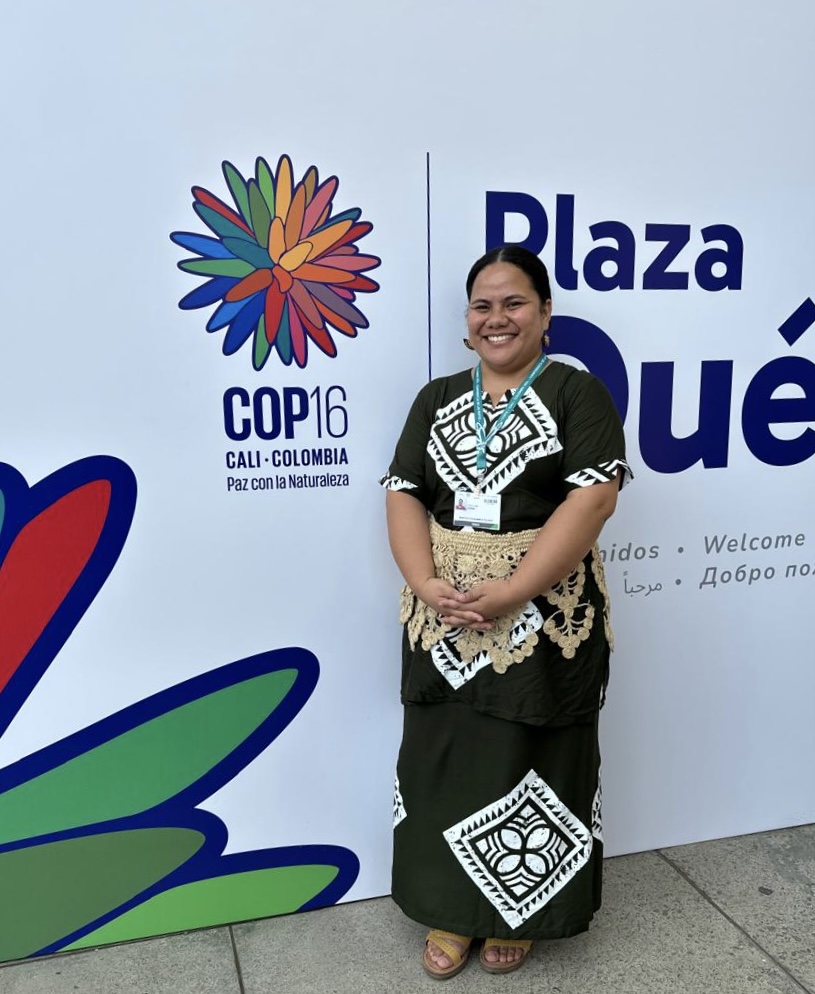
In this blog Tom Greaves, Editor of Environmental Values introduces a discourse on sustainability delivered by Elisiva Sunia at COP16 in Colombia.
The following discourse was delivered by Elisiva Sunia at the 16th meeting of the Conference of the Parties to the Convention on Biological Diversity (COP 16) in Cali, Colombia, October–November 2024. Elisiva attended the Convention as part of the Anglican faith delegation headed by Bishop Graham Usher. This provocative and urgent discourse draws on Elisiva’s own Tongan perspective, together with the ideas of other significant indigenous thinkers, a global faith perspective, and experience of sustainability practices. At the heart of the discourse, we find the image of Reweaving the Ecological Mat, which provides both a powerful metaphor and a material image of the interweaving of nature and culture in the Pacific region.
We are delighted that Elisiva has allowed us to reproduce her discourse here in the hope that it will continue to reach a wider audience who will be inspired by her words. Elisiva’s ideas echo many reflections that have appeared in the pages of Environmental Values in recent years, especially the importance of indigenous perspectives (Jarosz 2023)(Anbleyth-Evans et al. 2023)(Kelbessa 2022) and the practices of voluntary simplicity and degrowth. (Nesterova 2024)(Bort and Kieser 2023) We hope that readers will find further resonances and synergies with their own thinking and that Elisiva’s important voice will continue to be heard in the challenging times to come.
Tapu ki he Otua ‘oku ‘afio ‘I hotau lotolotonga, tapu ki he kau takilotu, kau fakafofoga mei he ngaahi fungavaka kehekehe ‘o e tui. Tapu atu kia teki moutolu hono kotoa pe kau ‘oku tau kaunga kau fakataha I he houa koeni.
[I acknowledge the presence of the Almighty in our midst, I also acknowledge the presence of distinguished faith leaders, delegates and esteemed participants. My respect to all of you who are gathered here with us at this hour.]
It is both an honour and a privilege to speak at this pivotal moment to share indigenous perspectives on production and consumption, which are critically important in our global quest for sustainability. The theme of ‘Enough is Enough’ reflects an urgent truth that many indigenous communities have known for centuries: that our relationship with the Earth must be one of balance, respect, and stewardship—not exploitation and overconsumption.
The Anglican Communion’s Call to COP16 highlights the vital role faith communities and indigenous peoples play in addressing biodiversity loss and climate change. In the Anglican tradition, care for God’s creation is a sacred duty. The voices of indigenous peoples, many of whom are members of the Anglican Communion, resonate with this calling, urging us to adopt a more harmonious and sustainable way of living. The third call from Anglican Communion’s Call to COP16 which is to Choose Wisdom: learning from the ways of indigenous peoples as they reflect the will of God. Wisdom, in this context, is not merely the accumulation of knowledge but the ability to discern right action in the face of global challenges. It is about knowing when to say, “Enough is enough,” and choosing a path forward that honors creation, sustains communities, and respects the interconnectedness of all life.
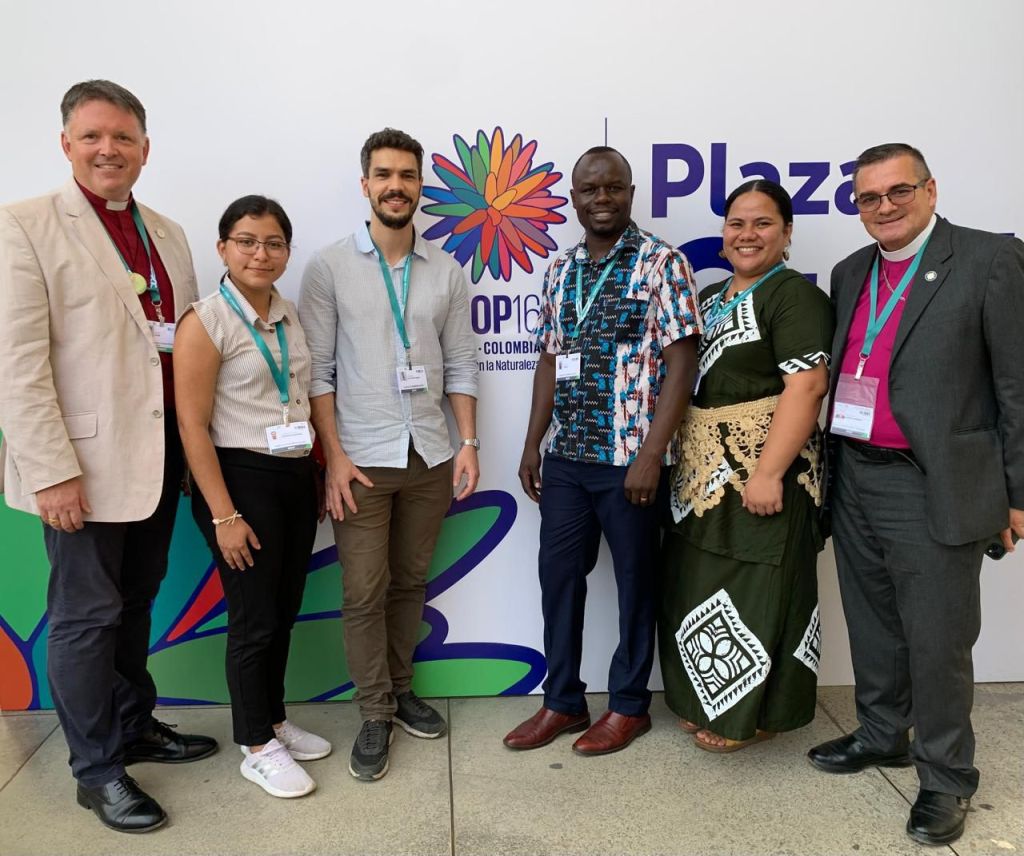
Elisiva with the COP Delegation and the Bishop of Colombia
An Indigenous Perspective on Production and Consumption
Weare guided by principles that contrast sharply with modern economic systems of extraction and consumerism. We believe in the interconnectedness of all life, where human beings are stewards, not owners, of the land, sea, and air. This perspective informs our approach to using natural resources – ensuring that future generations inherit a thriving, not depleted, world.
Some key principles of worldviews commonly held by many indigenous communities, emphasising sustainability, stewardship and respect for the natural resources include:
Sufficiency and Moderation: Indigenous peoples take only what is necessary for survival, ensuring that resources are never overexploited. This principle is grounded in a deep understanding that nature provides for all, but only if treated with respect and care. (Kimmerer 2013)
Cyclical Use of Resources: Many indigenous communities follow practices like rotational farming, and fishing, which allow ecosystems to recover and regenerate. These cycles prevent the exhaustion of resources and maintain the health of ecosystems over time. (Berkes 2012)
Collective Responsibility: Indigenous land and resources are often managed collectively, ensuring equitable access while preventing overuse. This communal approach reinforces accountability and stewardship, as each person’s actions affect the well-being of the whole community. (Berkes 2012)
Sacredness of Nature: For indigenous peoples, nature is not a commodity but a sacred entity with intrinsic value. Rivers, forests, and mountains are often revered as spiritual beings, and their protection is essential for both environmental and cultural survival. (Kimmerer 2013)
This indigenous perspective is not only wise but necessary in today’s world, where unsustainable consumption and production are driving us toward environmental collapse. Indigenous practices offer valuable lessons on how to live sustainably, respecting the limits of nature rather than constantly seeking to surpass them.
The Reweaving the Ecological Mat (REM) Framework
In the Pacific region, where communities face severe threats from climate change, the Reweaving the Ecological Mat (REM) Frameworkembodies the mentioned indigenous principles in a practical, region-specific context. The REM Framework is a holistic approach developed by Pacific faith-based organisations, indigenous leaders, and local communities. It aims to address ecological crises by integrating indigenous knowledge, theological insights, and sustainable development practices.
The concept behind the REM Framework is simple yet profound: just as a mat is woven from many strands, life itself is a tapestry of interconnected elements – economy, ecology, culture, and spirituality. If one strand weakens, the entire mat unravels. The framework, therefore, emphasises the reweaving of these essential strands to restore balance, resilience, and sustainability.
Keypillars of the REM Framework include:
Theological and Cultural Framing: In Pacific indigenous, land, sea, and air are sacred gifts. Human beings are called to be caretakers, not exploiters, of these gifts. The REM Framework incorporates these spiritual values into its vision for sustainable development, recognising the spiritual and cultural importance of nature in Pacific communities.
Economic Framing: The framework challenges the extractive, growth-driven models of the global economy. Instead, it promotes small-scale, community-led economies that prioritise ecological health and social wellbeing. In the REM vision, economic development is measured not just by Gross Domestic Product (GDP) but by the health of the land, water and people.
Community Resilience and Self-Sufficiency: The REM Framework emphasises the need for local resilience, encouraging communities to develop sustainable food, water, and energy systems that reduce dependence on external, often exploitative, systems. This aligns with indigenous practices of self-reliance and stewardship.
The REM framework has been implemented in various Pacific nations, where communities face some of the most severe impacts of climate change and biodiversity loss. In these regions, the framework is being used to restore degraded ecosystems, protect forests and marine areas, and build community resilience against climate-related disasters. In Fiji, Vanuatu and the Solomon Islands, faith-based and civil society organisations are working together to promote the sustainable use of natural resources, incorporating indigenous methods of agriculture, fishing, and forest conservation. The REM framework helps these communities balance ecological protection with economic needs, ensuring that development benefits all members of society, especially the most vulnerable.
The framework has also been adopted by the Pacific Island Forum as part of its development strategy for 2050, further cementing its role in guiding sustainable and resilient development in the region.
A practical example of these indigenous principles in action is the Safe and Resilient Church Campaign in the Diocese of Polynesia. This campaign outlines the efforts of the people, but most specifically the young people, in our Diocese to build resilience against climate change and environmental degradation. The campaign is able to highlight vulnerable people within the church and its community through vulnerability assessments utilising the Community Integrated Vulnerability Assessment (CIVA) Framework and the Quantum Geographic Information System (QGIS), addressing key areas like food security, water conservation, shelter, income security and disaster preparedness.
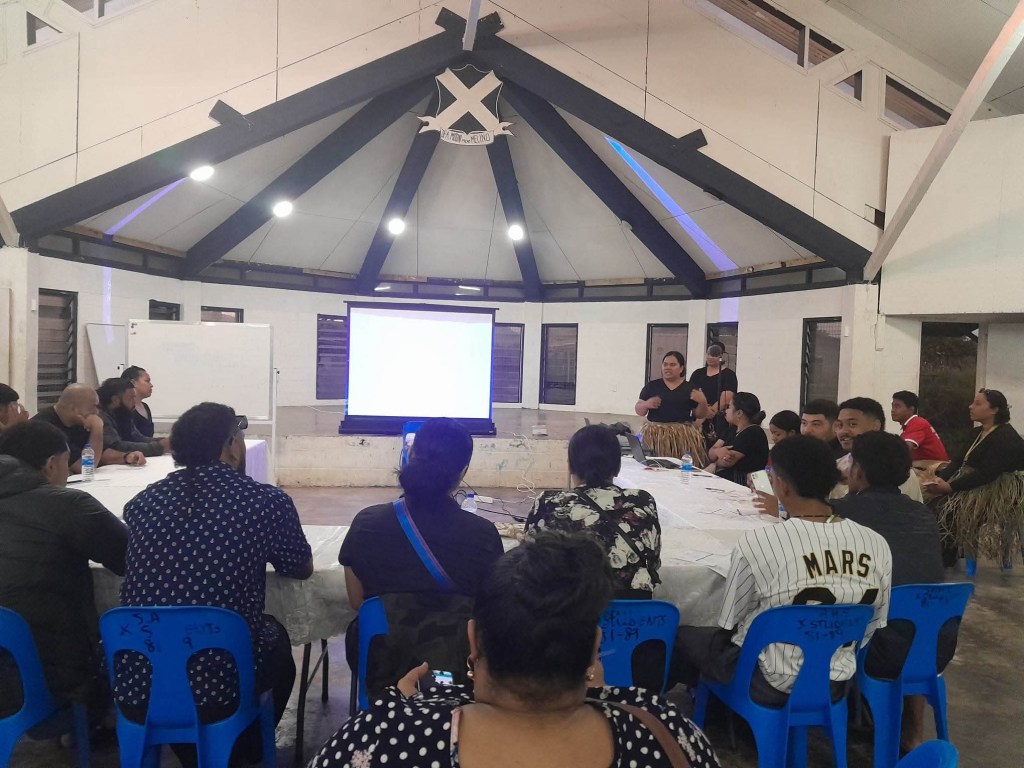
Training with young people in Tonga, preparing them to assess the level of vulnerability of parishioners
With these efforts, it reflects indigenous principles of sustainability, for example:
With Food Security it emphasises the importance of traditional agriculture and local food production, which are aligned with indigenous practices of growing diverse, resilient crops suited to the Pacific environment.
Water Conservation: Indigenous practices, such as harvesting rainwater and managing communal water sources, are integrated into local strategies to ensure sustainable water use.
Disaster Preparedness: The collective management of resources and the emphasis on community resilience align with the indigenous wisdom of shared responsibility for the safety and wellbeing of all.
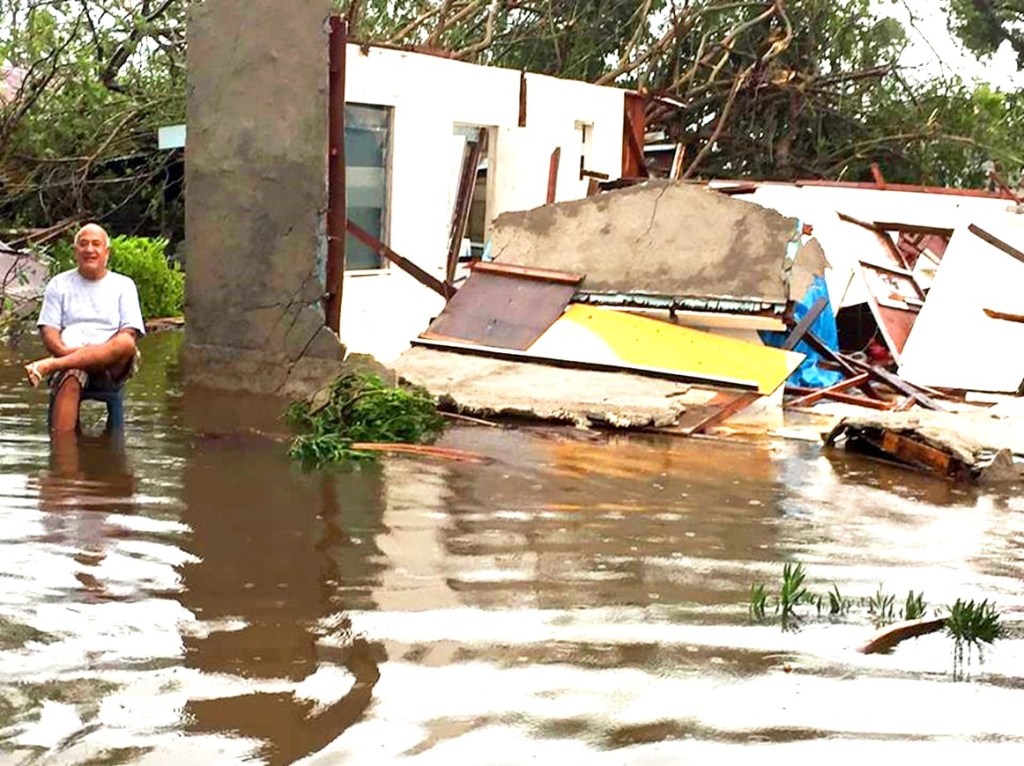
Mr Lihati Finau a parishioner sitting beside his home in Tonga after Tropical Cyclone Gita in 2018
This practical example showcases how indigenous knowledge, when combined with modern tools like the Community Integrated Vulnerability Assessment (CIVA) framework, can enhance resilience and sustainability in the face of environmental challenges.
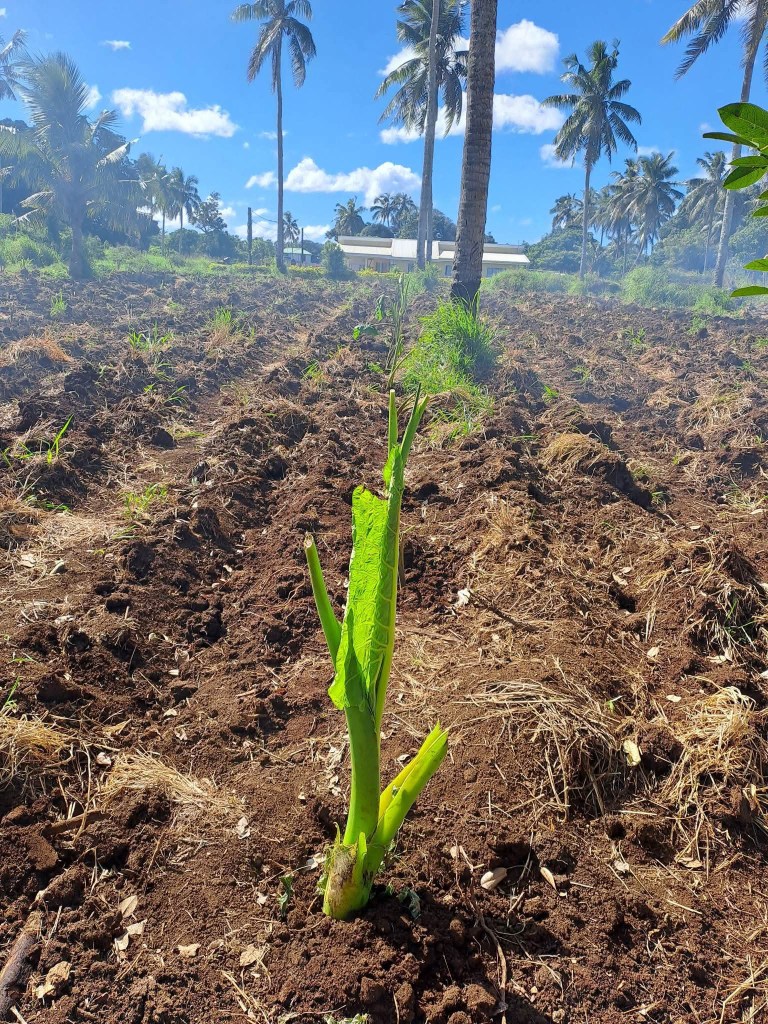
]Field preparation by the Men’s Group of All Saints Church, Tonga, to plant different crops to help the parishioners in time of disasters
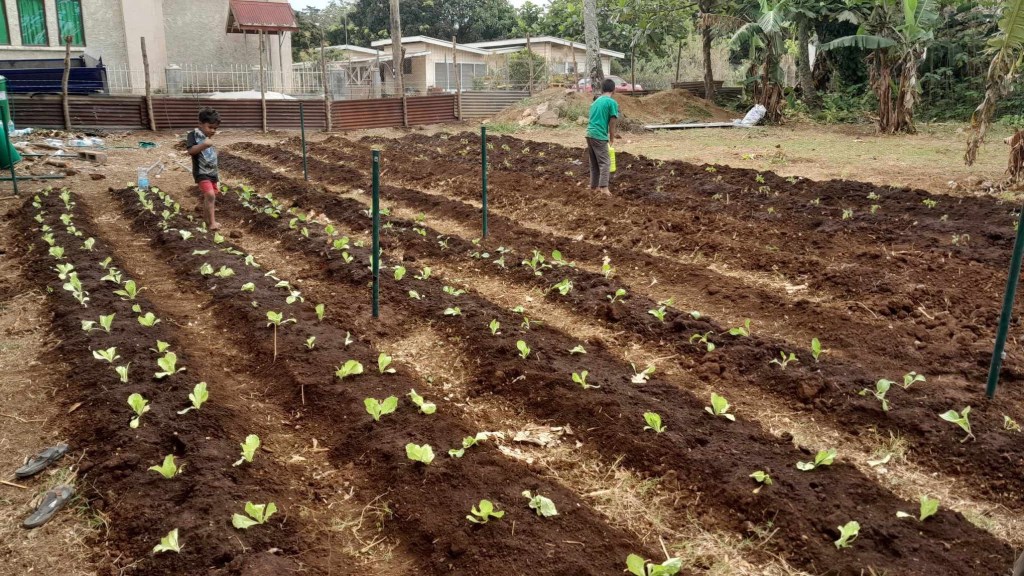
St Barnabas’s vegetable garden, Tonga,planted all to help parishioners
So, from the indigenous perspectives on production and consumption, and the invaluable contributions of frameworks like Reweaving the Ecological Mat and the Safe and Resilient Church Campaign that practices the CIVA Framework, the message is clear: enough is enough. We must stop exploiting the natural world beyond its limits and begin embracing the wisdom that indigenous peoples have lived by for centuries – wisdom that teaches us to take only what we need, to care for the Earth as a living system, and to ensure that our actions today preserve the beauty and bounty of creation for generations to come.
It’s about time for the world to listen and learn from these indigenous principles and adopt them as part of a global movement toward sustainable, just and resilient living.
Enough is enough – now is the time for wisdom, balance, and action. Malo ‘Aupito.
References
Anbleyth-Evans, Jeremy, Juan Ñanculef-Huaiquinao, Yohana Coñuecar-Llancapani, Francisco Araos Leiva, Wladimir Riquelme Maulén, and Christopher Raymond. 2023. ‘Mapuche Az-Mapu and Nature’s Contribution to People: Eudemonic Values for Living Well’. Environmental Values32 (3): 291–314. https://doi.org/10.3197/096327122X16569260361760.
Berkes, Fikret. 2012. Sacred Ecology. New York: Routledge.
Bort, Suleika and Alfred Kieser. 2023. ‘Coping with Devils and Climate Change with the Help of Asceticism? Exploring the Role of Asceticism as Trigger of Collective Climate Action’. Environmental Values32 (5): 525–53. https://doi.org/10.3197/096327123X16702350862764.
Jarosz, Nanda. 2023. ‘Indigenous and Local Knowledge and Aesthetics: Towards an Intergenerational Aesthetics of Nature’. Environmental Values32 (2): 151–68. https://doi.org/10.3197/096327122X16491521047053.
Kimmerer, Robin Wall. 2013. Braiding Sweetgrass: Indigenous Wisdom, Scientific Knowledge and the Teachings of Plants. Minneapolis: Milkweek Editions.
Nesterova, Iana. 2024.’Being of Deep Transformations: A Personal Journey Inspired by Clive L. Spash.’Environmental Values33 (2): 122–38. https://doi.org/10.1177/09632719231184615.
 whitehorsepress