This blog reproduces the Environment and History ‘Snapshot’ on space expansionism by Thomas Cheney first published in August 2024. Snapshots is now open for a new round of submissions. Please contact Deputy Editor Tyson Luneau with your pitches for 200 word essays that push the boundaries of environmental history.
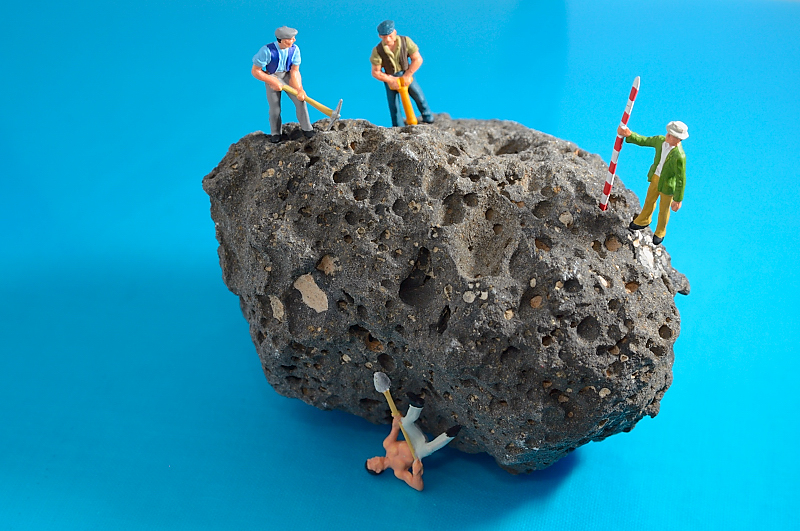
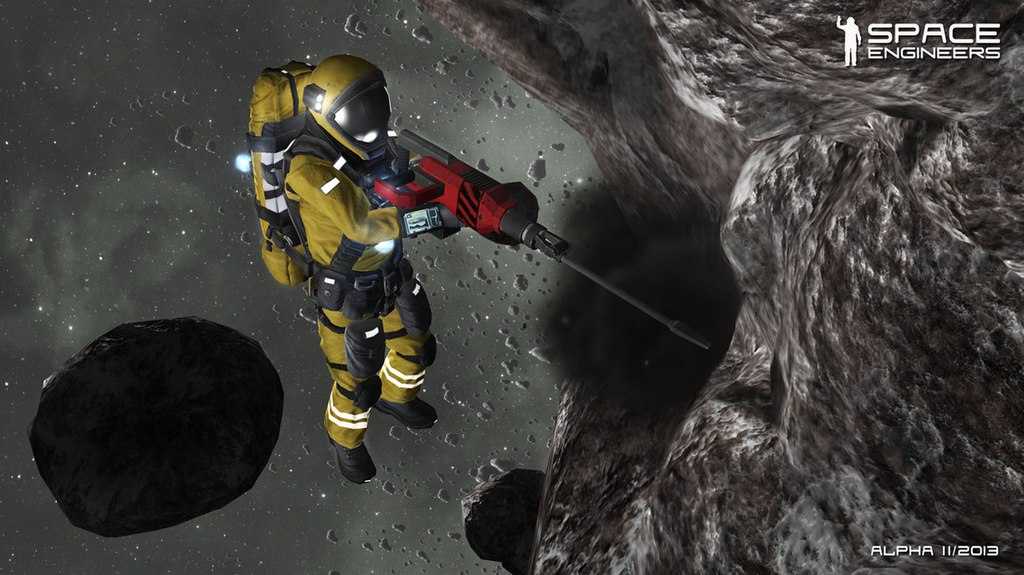
Space expansionists argue that outer space will solve the resource crisis, lift any ‘Limits to Growth’ and inaugurate a new era of unlimited prosperity. I argue that their vision does not herald a new epoch but extends the extractivist paradigm to outer space. If outer space is the final frontier, it is also the final resource frontier. Outer space as a resource frontier is an important lens through which to view current developments in space resource governance, the future of space governance, and how space governance connects to human history particularly the last 500 years.
Space as a resource frontier, however, is underexamined. The major exception is Julie Klinger,[1] who argues that recent moves to mine outer space ‘demand that we look beyond our Earthly provincialisms that anachronously place the Moon and near-Earth outer space beyond the purview of global political economy and hence, of critical concern’.[2] This article argues that space resources need to be seen in the context of the environmental history of resources, including imperial and colonial history of resource frontiers. The time for ‘critical concern’ is now. The US-led Artemis Accords are creating a permissive legal regime and China’s International Lunar Research Station is mirroring this process. The United Nations Committee on the Peaceful Uses of Outer Space (COPUOS) was discussing space resource governance at the time of writing.
It is vital to see space mining as part of the expanding resource frontier, the history of industrial capitalism and the process of ecological imperialism that has shaped the modern world. For example, space mining is connected to deep seabed mining in creating a broader framework for exploitation of the commons. Space expansionists resist the idea that there are ‘limits to growth’, and argue that space resources undermine the notion that ‘humanity’ faces a resource shortage. Geopolitics matter too. Space resources will be central to the geopolitical competition between the US and China. As Goswami and Garretson,[3] building on arguments made by Dolman[4] and the ‘Astropolitik’ school, make clear, it is already happening.
Cheap Nature
In seeing space resources as continuity, Moore’s concept of Cheap Nature is helpful. Moore argues that a driving aim of the capitalist project is making nature work harder and more cheaply. This quest for Cheap Nature is vital to capitalism. Under Cheap Nature, nature is transformed into a productive force, becoming vital to the production of surplus value.[5]Capitalism does not destroy nature per se but extracts more and more from it, for free or at low cost. While nature as ‘external’ to human existence was not a new phenomenon, Moore argues that Cheap Nature externalises nature in an unprecedented manner. It is organised around nature as something external, even alien, in a novel way.[6] There is a logic to an extension of the Cheap Nature project to outer space in a clear, and unprecedented, manner – as space resources can be presented as being outside nature (i.e. literally outside of ‘spaceship Earth’) in a manner that no others can be. If, even under a broad planetary scope, Nature is Earthbound, then space resources, being literally extraterrestrial, are outside Nature. This potentially provides a source of salvation for Cheap Nature, as the terrestrial frontiers are closing (or have closed already).[7]
The Long Exhaustion
The end of the Cheap Nature project was and is foreseeable. As Miller has written, ‘extraction-based life is a future-depleting system’.[8] A distinguishing feature of industrial life is its dependence on extracted, non-renewable resources, whether coal or oil; iron or lithium. These resources are finite and will be exhausted. Miller describes this as ‘the Long Exhaustion’, awareness of which dates back at least to the nineteenth century and underpins much angst about the future. With every tonne extracted, the exhaustion of resources we depend on nears. Therefore, a constant expansion of the resource frontier to stave off inevitable exhaustion is a defining feature of our age. Extractive capitalism needs frontiers – resource frontiers, waste frontiers, labour frontiers; endless growth requires endless supply. The existence of a frontier, and the ability to ‘push it back’, thus makes exhaustion a ‘place specific’ event: a mine may be exhausted but the frontier moves to new mines, as yet unexhausted.[9] In the era of space resources, that place-specific exhaustion means that, even on a planetary scale, exhaustion can be local; Earth may be exhausted but space is not.
Resource frontiers and their expansion are core to the construction of modernity. The quest for new resource frontiers fuelled the growth of European empires.[10] However, the question remains: are there enough new frontiers? Extraction ‘requires constant movement, downward and outward, on a planet whose frontiers are beginning to close in’.[11] That movement has expanded the resource frontier to the point of being a Planetary Mine,[12] which now encroaches upon even the depths of the ocean.[13] It is unsurprising that the extractivist gaze turns to outer space.
The Planetary Mine
The concept of the Planetary Mine is grounded in Arboleda’s argument that there needs to be a reconceptualisation of capitalism’s geography. Arboleda argues that, while resource booms have been understood as the result of unequal exchange between imperial centres and peripheries, the technological and industrial modernisation of the Global South since the 1980s has reduced the value of this framework.[14] His Planetary Mine is now the best way to understand the system of capital exchange which ‘transcends the territoriality of extraction’ and forms a planetary system of capital. Capitalism is now ‘truly planetary’ rather than being a patchwork of Euro-American imperial markets.[15] In this system, the state and world market are interlinked: the world market unfolds through the medium of states, whose political authority provides the foundation for the existence of the world market. The world market therefore is not a patchwork of national markets, but a global system organised into national markets.[16] The state, however, remains an important part of the global capitalist system.[17] Its legal and policing functions are key to the functioning of the global system.
Ecological Imperialism
The planetary mine and the Cheap Nature project are related to the concept of Ecological Imperialism,[18] particularly as developed by Ross.[19] This process has driven a radical transformation of global ecology to fulfil the enormous and unprecedented appetite for raw materials generated by industrial capitalism.[20] Therefore, Ross argues that European colonialism should be understood as a ‘socio-ecological’ project that aimed to transform the non-European world into ‘productive and legible spaces’ of utility to European industry.[21] This was an attempt to stave off the ‘long exhaustion’ and enable Euro-Americans to exceed the ecological limits of their homelands by drawing on ‘external’ regions for the resources they relied on. Cheap Nature, the Long Exhaustion, the Planetary Mine and Ecological Imperialism are important and useful frameworks for understanding space resources as part of a continuity, rather than a new or radical departure – thus challenging notions that space mining will or even can usher in radical change without a broader paradigmatic shift.
Space Resources and the Limits to Growth?
The notion that space is the next frontier, particularly for the United States, is an unsubtle one. Space advocates embrace, uncritically, the argument, based on Turner’s frontier thesis,[22] that the closure of the West means the United States must turn to outer space. This was Kennedy’s argument in 1962. Zubrin, perhaps one of the best known ‘space expansionists’, explicitly embraces Turner’s thesis and argues that the United States and ‘progressive humanistic culture’ need the challenge of a frontier, which now can only be provided space.[23] Further, space expansionists argue that the space frontier will provide virtually unlimited resources.[24] This is a common refrain and one with more than a subtle hint at the legacies of ecological imperialism. Solar system resources, the argument goes, will allow the continued exceeding of ecological limits.[25] This amounts to an explicit rejection of any ‘limits to growth’.[26]
Geopolitical competition also comes into play and highlights the value of critically considering the frontier narrative. The Astropolitik school argues that the United States needs to secure space resources to ensure American prosperity and security, particularly in the face of the rise of China.[27] Therefore, space resources present a multifaced imperative. They enable the continuation, even extension, of extractive, industrial capitalism by providing a new and ‘unlimited’ frontier to banish the ‘long exhaustion’. Further, in a world where America’s access to resources will be contested by China and other rising powers, and where the capitalist world market is less dominated by the hegemonic power of the United States, space resources present an untapped frontier that America can, and must dominate. That this can all be presented as part of the effort to ‘save humanity’ by making it ‘multiplanetary’ is icing on the cake.
The Extra-Planetary Mine or Why Space Mining Matters?
Space mining, rather than being a novel development, is part of the process of commodification and extraction that has wrought unprecedented ecological transformation. Understanding space resources as continuity is important to grasp why there is interest in space resources and what that interest will develop into. The depiction of space mining as different or new and space as a truly virgin frontier is the pinnacle of Cheap Nature. Nature in outer space does not need to be externalised: it is inherently external and arguably is not Nature. The task is to expand our understanding of nature and our broader extraplanetary environment.
The looming prospect of space mining requires undertaking a ‘cosmic turn’ in environmental thinking – if ‘the environment’ or ‘Nature’ ends at the atmosphere, then space is the perfect frontier, truly external from Nature therefore ripe for exploitation and extractivism. As Marino and Cheney argue, space needs to be as much a part of environmental thinking as environmental thinking needs to be embedded in space governance.[28] When rethinking human-nature relations we must include space in that cosmology or it will be incomplete, and sooner than most realise. Will space be the perfect and final resource frontier, ripe for exploitation, or a chance for a post-extractivist future and a reimagining of humanity’s place in not just Nature but the cosmos?
[1]Julie Michelle Klinger, Rare Earth Frontiers: From Terrestrial Subsoils to Lunar Landscapes (Ithaca: Cornell University Press, 2017); Julie Michelle Klinger, ‘Environmental geopolitics and outer space’, Geopolitics 26 (2021): 666.
[2]Klinger, Rare Earth Frontiers, p. 26.
[3]Namrata Goswami and Peter A. Garretson, Scramble for the Skies: The Great Power Competition to Control the Resources of Outer Space(London: Lexington Books, 2022).
[4]Everett C. Dolman, Astropolitik: Classical Geopolitics in the Space Age (London and Portland, Oregon: Frank Cass, 2002).
[5]Jason W. Moore, Capitalism in the Web of Life: Ecology and the Accumulation of Capital (London: Verso 2015), p. 16.
[6]Ibid., pp. 13–17.
[7]Ibid.
[8]Elizabeth Carolyn Miller, Extraction Ecologies and the Literature of the Long Exhaustion (Princeton: Princeton University Press, 2021), p. 12.
[9] Ibid., pp. 35–85.
[10] Martín Arboleda, Planetary Mine: Territories of Extraction Under Late Capitalism (London: Verso, 2020), p. 40.
[11] Miller, Extraction Ecologies, p. 85.
[12] Arboleda, Planetary Mine, pp. 4–5.
[13]Karen McVeigh, ‘Deep-sea mining: Why is interest growing and what are the risks?’ The Guardian, 9 Jan. 2024: https://www.theguardian.com/environment/2024/jan/09/deep-sea-mining-why-is-interest-growing-and-what-are-the-risks (accessed 23 April 2024).
[14] Arboleda, Planetary Mine, pp. 4–5.
[15] Ibid., pp. 5–8.
[16] Ibid., pp. 19–20.
[17] Ibid., p. 61.
[18]Alfred W. Crosby, Ecological Imperialism Second Edition (Cambridge: Cambridge University Press, 2015).
[19]Corey Ross, Ecology and Power in the Age of Empire: Europe and the Transformation of the Tropical World (Oxgford: Oxford University Press, 2017).
[20] Ibid., pp. 2–8.
[21] Ibid., p. 3.
[22] Frederick Jackson Turner, The Significance of the Frontier in American History (Harmondsworth: Penguin, 2008).
[23] Robert Zubrin and Richard Wagner, The Case for Mars: The Plan to Settle the Red Planet and Why We Must (New York: Touchstone, 1997), pp. 295–306.
[24] Mike H. Ryan and Ida Kutschera, ‘The case for asteroids: Commercial concerns and considerations’, in Viorel Badescu (ed.), Asteroids: Prospective Energy and Material Resources (Heidelberg and New York: Springer, 2013) pp. 645–646.
[25] Aaron Bastani, Fully Automated Luxury Communism: A Manifesto (London: Verso, 2019), pp. 119–135; Ivano Bertini, ‘Asteroids close up: What we have learned from twenty years of space exploration’, in Badescu (ed.), Asteroids, p. 1; Charles S. Cockell, Space on Earth: Saving Our World by Seeking Others (London and New York: Macmillan 2007) 6; Dennis Wingo, Moonrush: Improving Life on Earth with the Moon’s Resources (Burlington, Ontario: Apogee Books, 2004), p. 11; John Simpson Lewis, Mining the Sky: Untold Riches from the Asteroids, Comets, and Planets (Reading, Massachusetts: Helix books, 1997), p. 194.
[26]Wingo, Moonrush, pp. 11, 43–46, 260; Robert Zubrin, The Case for Space: How the Revolution in Spaceflight Opens up a Future of Limitless Possibility (New York: Prometheus Books, 2019), pp. 301–303.
[27]Goswami and Garretson, Scramble for the Skies; Zubrin, The Case for Space, pp. 272–279; Paul D. Spudis, The Value of the Moon: How to Explore, Live, and Prosper in Space Using the Moon’s Resources (Washington, DC: Smithsonian Books, 2016), pp. 160–176.
[28] Alessandra Marino and Thomas Cheney, ‘Centring environmentalism in space governance: Interrogating dominance and authority through a critical legal geography of outer space’, Space Policy 63 (2023): 101521.
 whitehorsepress