In this blog, originally published as a Snapshot in Environment and History (February 2025) Emma L. Verstraete uses the history of the Seward Peninsula in Alaska to demonstrate why using a critical lens on past human modifications across the landscape can provide vital context for modern researchers working in regions that have experienced large volumes of resource extraction and human modification.

Like climate modelling, environmental history frequently aggregates information, theories and ideas from multiple disciplines to build new narratives about what happened in the past. As climate modellers attempt to refine future scenarios and focus them to increasingly smaller areas, a process known as downscaling, the benefits of attempting to integrate environmental history into the modelling process becomes increasingly clear.[1] These model approaches seek to project future climates based on the unprecedented and unrelenting carbon emissions created by modern human culture. While our current warming experience is unique, the effects of some of the long-term effects of post-industrialisation have been studied extensively by environmental historians, providing valuable data that can be vital for looking towards the future.[2] The fragile ecosystem of the arctic tundra is easily disturbed but difficult, if not impossible, to restore to equilibrium. The permanent changes experienced in these landscapes can impact their carrying capacity for environmental disruption. This can impact what these ecosystems can endure when new mining operations open, making it vital to consider the long-term effects of extractive land-use in order to assess what is environmentally feasible for an area.[3] In this snapshot I will use the history of the Seward Peninsula in Alaska to demonstrate why using a critical lens on past human modifications across the landscape can provide vital context for modern researchers working in regions that have experienced large volumes of resource extraction and human modification.
The harsh climates and difficulty of travel caused by sea ice and winter storms in the Arctic did not dissuade early colonists from attempting to lay claim to the vast resources of the Alaskan territory.[4] Mining and mineral resources have played a large role in the settlement and extraction of the landscape in Alaska. Waves of gold rushes and later open pit mining and natural gas extraction have left increasingly deeper scars on the landscape of Alaska, particularly in regions such as the Seward Peninsula, located on the western coast of the state and littered with a patchwork of permafrost and thawed ground.[5] Permafrost, or continuously frozen ground, is part of the unique Arctic ecosystem.[6] The entire Arctic region has varying degrees of permafrost ground coverage, ranging from continuous nearer the North Pole to sporadic along the outer edge of the Arctic Circle.[7] Large amounts of research has been poured into understanding how modern resource extraction affects current permafrost distribution and to project future permafrost distribution, but comparatively little research has been done into how historical mining could still be impacting the environment today.[8]
In 1898 Nome, Alaska was overrun by white settlers desperate to make their fortune after the discovery of gold on the beaches of Nome by ‘three lucky Swedes’.[9] While contemporary indigenous groups were well aware of the abundance of gold in the area, the presence of the mineral was a new discovery for the colonial powers that controlled the Alaskan territory.[10] By 1900 the entire Seward Peninsula was covered in mining claims, though miners had to contend with a thick layer of permafrost just beneath the surface. This permafrost was melted by any means necessary. Wood fires, boilers to steam the soil and running water were all used to melt the frozen tundra once the rivers and beaches began to run dry of easily obtainable gold.[11] Open mines and mining ditches soon dotted the landscape, forcibly removing the layer of frozen protection that helped maintain the delicate ecosystem of the arctic tundra; the longest and most famous ditch on the Seward Peninsula measured 38 miles long.[12]
These new mines, and the techniques employed to make them profitable, permanently altered the landscape of the Seward Peninsula. Larger settlements and human population loads reduced subsistence fish and game in the area, and massive deforestation occurred to produce fuel to melt the permafrost.[13] Railroads and temporary roads soon dotted the landscape and were quickly made permanent with state sponsored gravel highways designed to connect coal and gold mines to the shipping hub of Nome.[14] These efforts all had undeniable long-term effects on the environment and the arctic tundra ecosystems of the Seward Peninsula. Official engineering documents from Alaska note that ‘areas which have a long history of mining may not have predictable permafrost distribution as a result of previous disturbances’, going on to say that the permafrost may have been ‘permanently obliterated’ in some areas.[15] To this end, the presence of historic mining activity, and its long term ecological impacts, are relevant to climate researchers seeking to understand how the melting permafrost will impact air temperature, precipitation, sea ice and ground temperature as they attempt to forecast future environmental realities in the Arctic.[16]
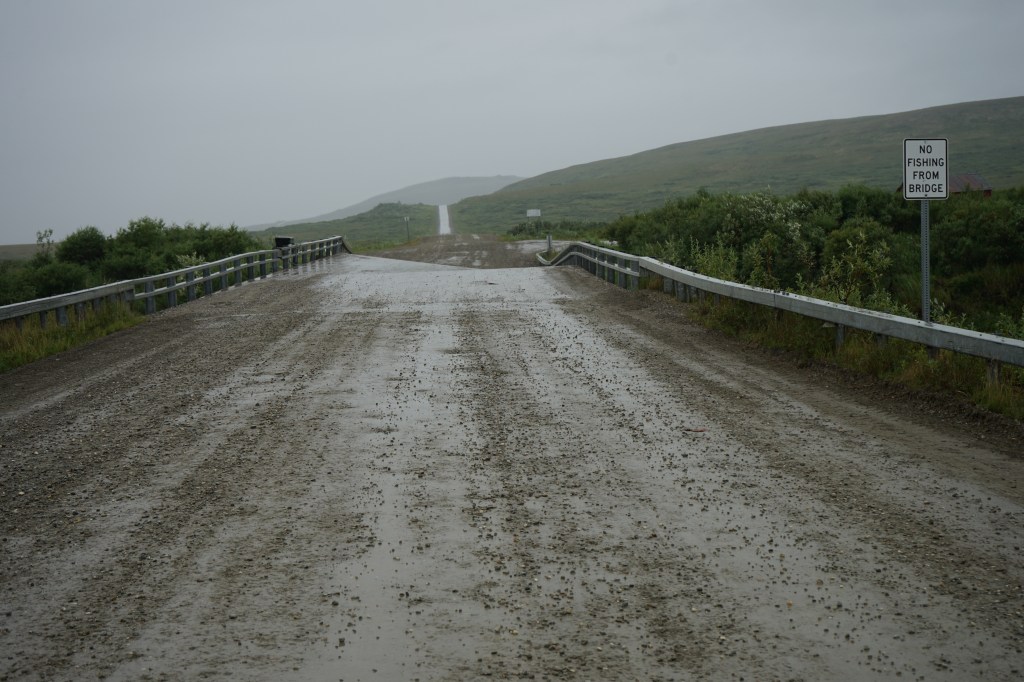
Recent studies have found that climate projections fail to properly account for the rate of warming in the Arctic, and the original estimation that the region was warming twice as fast as the rest of the globe has been corrected to the region warming four times as fast. The nature of this discrepancy is theorised to be a result of the feedback loop generated with permafrost melt, though the exact nature of the mechanism is uncertain.[17] While climate scientists were uncovering this unprecedented warming rate, environmental historians have begun to research what exactly happens to the land long after mining operations have ceased. These multi-disciplinary teams have found that not only is the permafrost permanently impacted, but the biodiversity change and environmental toxicity from mining can still be measured a century later.[18]Careful examination of the archaeological record, geologic sediment cores and historical archives have highlighted that, while little research on this exists, environmental impacts to the surrounding areas do not disappear when the mines are closed and the land is given time to recover.[19] These results indicate that the ripple effect of human activity and land-modification could be more far-reaching than previously thought, with some environmental historians arguing that ‘as an important reminder of the multiple pressures arising from resource extraction undertakings that affect the environments and communities in Arctic regions today’.[20]
On the Seward Peninsula, new mining operations are beginning to prospect the region and establish economic interests, with unknown potential effects to local indigenous subsistence land use. In some cases, these prospective mines are in the few areas that escaped the first gold rush without major resource extraction .[21] Environmental historians are well positioned to contribute to forecasting and predicting possible effects of the mining operations, especially in light of our the rapid permafrost thaw and forecasted ecological change to the region.[22] Historical documentation already indicates that the first gold rush in the region caused massive environmental impacts and changed subsistence patterns.[23] Data produced by environmental historians and multidisciplinary teams at other Arctic mining sites suggests that understanding potential environmental impacts of any new mines must include an evaluation of the long term effects of previous mining efforts in the region, especially as the permafrost thaws and begins to accelerate potential downstream effects of mining run-off.[24] This research underscores how vital it is to protect the few remaining untouched areas, since intensive study has proved the environment’s inability to return to its original state.
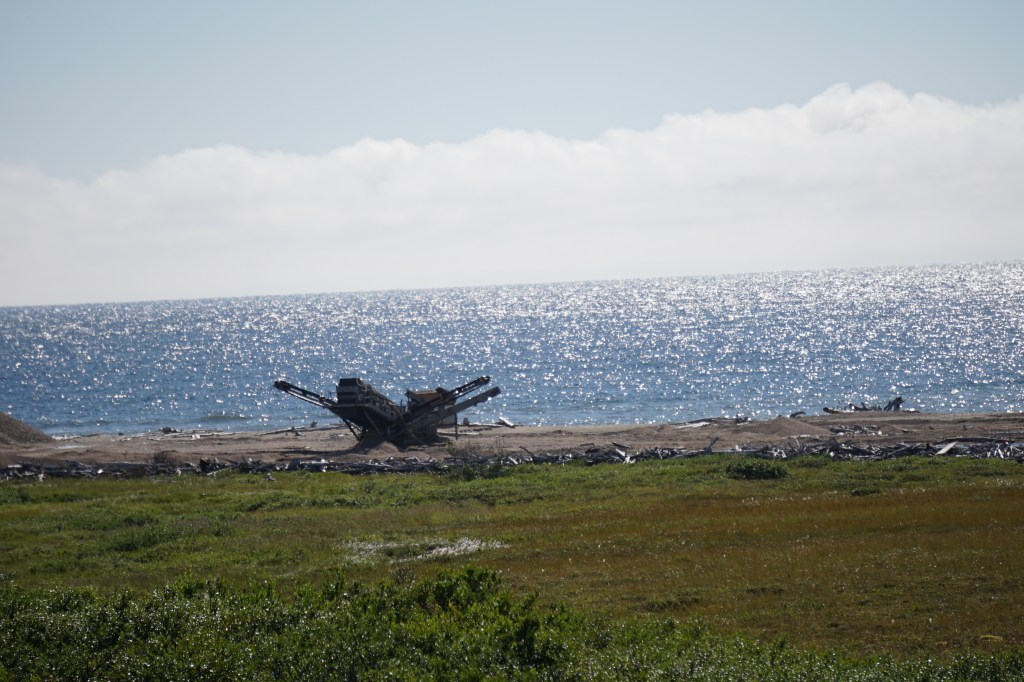
Increasingly, climate scientists are being tasked with measuring and predicting multiple futures as society works to agree on what should be done and what is possible.[25] Forecasting these futures currently exists in a land of great uncertainty, primarily due to the fact that ‘humans are more than numbers’, and the stories that environmental historians can tell will be paramount to understanding how humans in the past adapted to and interacted with a rapidly changing environment and measuring long term effects that climate scientists currently do not have the data to examine.[26] Historic resource extraction has left behind long-term ecosystem disruption, such as increased permafrost variability. Using environmental history to understand this past land-use and its effects helps us predict the future more accurately. Current modelling techniques are increasingly able to operate with diverse datasets, making it possible to incorporate past land use, current land use and planned land use into new models to understand future outcomes and possibilities. Treating the land as a living document that is experiencing both the effects of modern extraction and the continued effects of past extraction can allow environmental historians and climate researchers to work together to evaluate how these pressures could interplay and impact communities. Land, just like humans and cultures, has a history and that history should be considered and integrated in our projections for the future.

[1] ‘Basics of Global Climate Models | USDA Climate Hubs’: https://www.climatehubs.usda.gov/hubs/northwest/topic/basics-global-climate-models (accessed 29 Oct. 2024).
[2] Mark Carey et al., ‘Forum: Climate change and environmental history’, Environmental History 19 (2) (2014): 281–364, https://doi.org/10.1093/envhis/emu004; John R. McNeill and George Vrtis, Mining North America: An Environmental History Since 1522(Berkley: Univ. of California Press, 2017); Louis S. Warren, American Environmental History (Hoboken: John Wiley & Sons, 2021).
[3] Dag Avango and Gunhild Rosqvist, ‘When mines go silent: Exploring the afterlives of extraction sites’ in Douglas C. Nord (ed.), Nordic Perspectives on the Responsible Development of the Arctic: Pathways to Action (Cham: Springer International Publishing, 2021), pp. 349–67, https://doi.org/10.1007/978-3-030-52324-4_16; Arn Keeling and John Sandlos, ‘Mine abandonment, reclamation, and redevelopment in the Canadian North’, in Brad Martin and Stephen Bocking (eds), Ice Blink: Navigating Northern Environmental History (Place: University of Calgary Press, 2017), pp. 377–420; Paul E. Koke, ‘The impact of mining development on subsistence practices of Indigenous peoples: Lessons learned from Northern Quebec and Alaska’ (Thesis, University of Northern British Columbia, 2009), https://doi.org/10.24124/2009/bpgub592
[4] Fred Howard Moffit, The Fairhaven Gold Placers, Seward Peninsula, Alaska (US Government Printing Office, 1905); Nome, Alaska(Northwestern Alaska Chamber of Commerce, 1932).
[5] Bathsheba Demuth, ‘Grounding capitalism: Geology, labor, and the Nome gold rush’, in Benjamin Mountford and Stephen Tuffnell (eds), A Global History of Gold Rushes (Berkley: University of California Press, 2018), pp. 252–72, https://www.jstor.org/stable/10.1525/j.ctv5j0298.17; Terrence Cole, Nome, City of the Golden Beaches (Anchorage Alaska Geographic Society, 1984); Joseph Daniels, The Geology and Mining of the Nome District, Alaska (Cambridge, Massachusetts: Massachusetts Institute of Technology, 1905), https://dggs.alaska.gov/pubs/id/27776; Kathryn Taylor Morse, The Nature of Gold: An Environmental History of the Alaska/Yukon Gold Rush (Seattle: University of Washington, 1997), http://hdl.handle.net/1773/10468.
[6] Pey-Yi Chu, ‘Introduction: Historicising permafrost’, in The Life of Permafrost, A History of Frozen Earth in Russian and Soviet Science(Toronto: University of Toronto Press, 2020), pp. 3–24, https://www.jstor.org/stable/10.3138/j.ctv1bzfp6j.4.
[7] Olli Karjalainen et al., ‘Circumpolar permafrost maps and geohazard indices for near-future infrastructure risk assessments’, Scientific Data 6(1) (2019): 190037, https://doi.org/10.1038/sdata.2019.37.
[8] Avango and Rosqvist, ‘When mines go silent’.
[9] Cole, Nome, City of the Golden Beaches.
[10] Demuth, ‘Grounding capitalism’.
[11] Daniels, ‘The geology and mining of the Nome District, Alaska’; Cole, Nome, City of the Golden Beaches; Demuth, ‘Grounding capitalism’; George Harrington, Mining on the Seward Peninsula (United States Geological Survey, 1921).
[12] NPS, ‘Fairhaven Ditch – Bering Land Bridge National Preserve (U.S. National Park Service)’, US National Park Service, 2024: https://www.nps.gov/bela/learn/historyculture/fairhaven-ditch.htm
[13] Moffit, The Fairhaven Gold Placers, pp. 77–78.
[14] Nome, Alaska.
[15] Erica Kotler, Characteristics of Permafrost and Ice-Rich Ground Surrounding Placer Mining Operations, Yukon Territory: Guidelines for Management Practices (Whitehorse: Department of Fisheries and Oceans Habitat Management Sector, 2003), p. 3.
[16] Kimberley Miner et al., ‘Frozen no more, a case study of Arctic permafrost impacts of oil and gas withdrawal’, Scientific Reports 14 (1) (2024): 25403, https://doi.org/10.1038/s41598-024-76292-2
[17] Mika Rantanen et al., ‘The Arctic has warmed nearly four times faster than the Globe since 1979’, Communications Earth & Environment 3(1) (2022): 1–10, https://doi.org/10.1038/s43247-022-00498-3
[18] Avango and Rosqvist, ‘When mines go silent’; Dina Brode-Roger, ‘Mining, materiality and memory: Lingering legacies in Longyearbyen: A case study of the peculiar afterlife of Longyearbyen’s old power plant’, Journal of Contemporary Archaeology 9 (1) (2022): 104–20, https://doi.org/10.1558/jca.21643; Keeling and Sandlos, ‘Mine abandonment, reclamation, and redevelopment’.
[19] Keeling and Sandlos, ‘Mine abandonment, reclamation, and redevelopment’, 406.
[20] Avango and Rosqvist, ‘When mines go silent’, 365.
[21] Nathaniel Herz Journal Northern, ‘A new rush arrives on the Seward Peninsula: For graphite, not gold • Alaska Beacon’ Alaska Beacon(blog), 27 Sept. 2023: https://alaskabeacon.com/2023/09/27/a-new-rush-arrives-on-the-seward-peninsula-for-graphite-not-gold/
[22] Keeling and Sandlos, ‘Mine abandonment, reclamation, and redevelopment’; Koke, ‘The impact of mining development on subsistence practices; Morse, The Nature of Gold; McNeill and Vrtis, Mining North America; Avango and Rosqvist, ‘When mines go silent’.
[23] Daniels, ‘The geology and mining of the Nome District, Alaska’; McNeill and Vrtis, Mining North America; Demuth, ‘Grounding capitalism’.
[24] Avango and Rosqvist, ‘When mines go silent’; Keeling and Sandlos, ‘Mine abandonment, reclamation, and redevelopment’; Miner et al., ‘Frozen no more’; Lilian (Na’ia) Alessa et al., ‘Freshwater vulnerabilities and resilience on the Seward Peninsula: Integrating multiple dimensions of landscape change’, Global Environmental Change 18 (2) (2008): 256–70, https://doi.org/10.1016/j.gloenvcha.2008.01.004
[25] Adriana Petryna, Horizon Work: At the Edges of Knowledge in an Age of Runaway Climate Change (Princeton (N.J.): Princeton University Press, 2022), p. 6.
[26] Emily Wakild, ‘The challenge of scale in environmental history: A small meditation on a large matter’, RCC Perspectives 4 (2014): 26.
 whitehorsepress