This blog post republishes the obituary of John Dargavel by Mauro Agnoletti, co-editor in chief of Global Environment, published in Global Environment 18.2 (June 2025). John was a good friend to the White Horse Press, serving on the board of Global Environment and publishing two books with us, Science and Hope (with Elisabeth Johann) and Anthropocene Days.
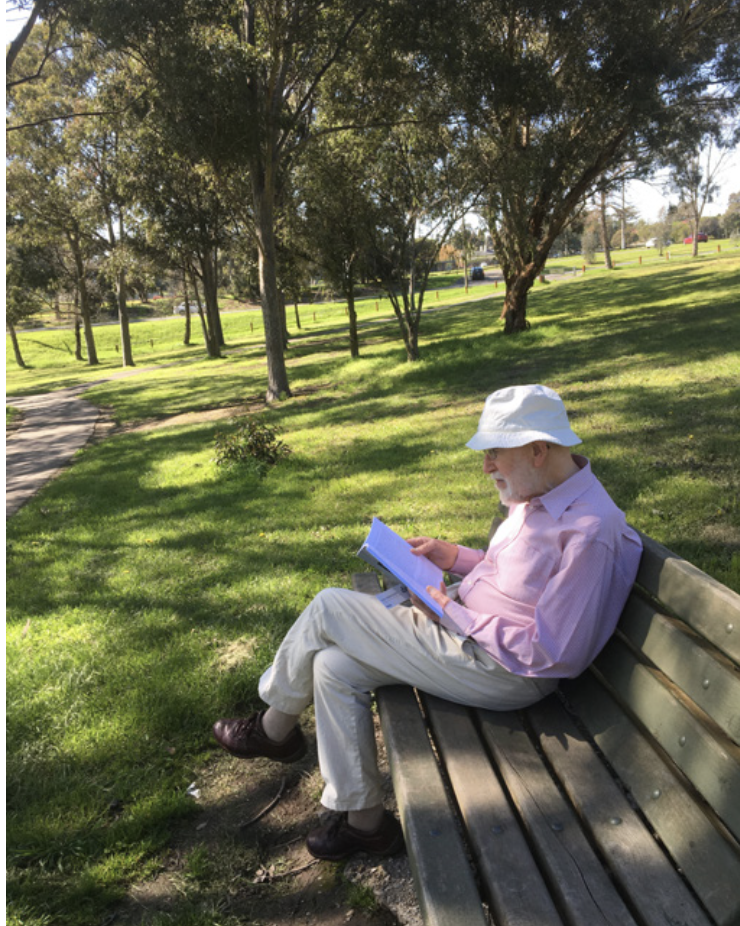
Dr John Dargavel, a long-standing member of the IUFRO Research Unit 9.03 Forest History and Traditional Knowledge passed away on 25 July 2024, leaving behind a remarkable legacy in forestry and environmental sciences. Born in London on 15 August 1932, John’s career was marked by ground-breaking contributions to the fields of Forestry, Forest History, Environmental History, and particularly in integrating social sciences into forestry practices.
John’s academic career began with a BSc in Forestry from the University of Edinburgh in 1956, followed by an MSc in Forestry from the University of Melbourne in 1970. His PhD from the ANU in 1983 presented a radical analysis of the Tasmanian wood industries, highlighting his innovative approach and deep understanding of forest economics, planning, politics and history.
John’s professional career spanned several continents and institutions. He worked as a forester in government and industry for twenty years, and researched and taught in the areas of forest economics, politics and history. His academic career included a period of research and teaching at the University of Georgia before he joined the Fenner School for Environment and Society at the Australian National University in 1982, where he remained a pivotal figure until his retirement. His research interest focused on Environmental history, Forest history, History of forest science, History of Australian wood collections, History of forestry education, Biographies of foresters, Political economy of forest sector, Labour history of forest sector and Arboreal remembrance. John was a founding member of the Australian Forest History Society and the organiser and co-organiser of five National Conferences on Australian Forest History and co-editor of the proceedings.
A pioneer in forest history and social sciences in forestry he published extensively onforest management, industrial and labour history, trade, forest and environmental politics, and cultural aspects of landscape and remembrance. His notable works include Fashioning Australia’s Forests (1995), Hard Work to Starve: a Tasmanian Play (2002), The Zealous Conservator (2008), History of Forestry: Institutions and Culture (2009),
His book with Elisabeth Johann on the history of forest science over the last three centuries, Science and Hope: a Forest History was published in 2013, followed by a German edition Die Geschichte der Forstwissenschaft – eine Geschichte der Hoffnung in 2018. He had a long-standing interest in John Evelyn (1620–1706) and in 2020 edited a collection of papers with Ben Wilkie to celebrate Evelyn’s 400th birthday, Restoring Forests in Times of Contagion. His most recent book, the autobiographical Anthropocene Days (2023) considers how we experience the environment in everyday life.
John Dargavel’s engagement in IUFRO started 1986 at the World Congress in Ljubljana, where he was appointed Coordinator of Subject Group Tropical Forest History S 6.07.01. One of his long-lasting contributions was the organisation of the conference on Changing Pacific forests: historical perspectives on the forest economy of the Pacific basin in Hawaii, including the proceedings edited by him and Richard Tucker, and sponsored by the Forest History Society and IUFRO Forest History Group, Durham in 1992. In 2005, on the occasion of the XXII IUFRO World congress in Brisbane, he organised a side event on Australian Forest History jointly with the IUFRO Research Unit 9.03 Forest History and Traditional knowledge. Proceedings were published in the NEWS OF FOREST HISTORY Nr. II (35)/2005.
In 2008, he became member of the board of the international journal Global Environment, journal of Interdisciplinary History (White Horse Press), in this role he gave an invaluable contribution to the growth of the journal, retiring from the position only when he reached ninety years of age.
John was known for his collegiality and dedication to his students. His engagement with various academics and his contributions to numerous research and advisory committees reflected his lifelong dedication to forestry and environmental science. It was a pleasure and inspiration to work together on several projects and the collaboration was marked by a deep friendship.
His friendliness, dedication, kindness, competence, humour and never-ending interest will be deeply missed.
 whitehorsepress