In this blog, Isis Brook, deputy editor of Plant Perspectives, reviews the exhibition ‘Unearthed: The Power of Gardening’, at the British Library until 10 August 2025. More information on the exhibition can be found here.
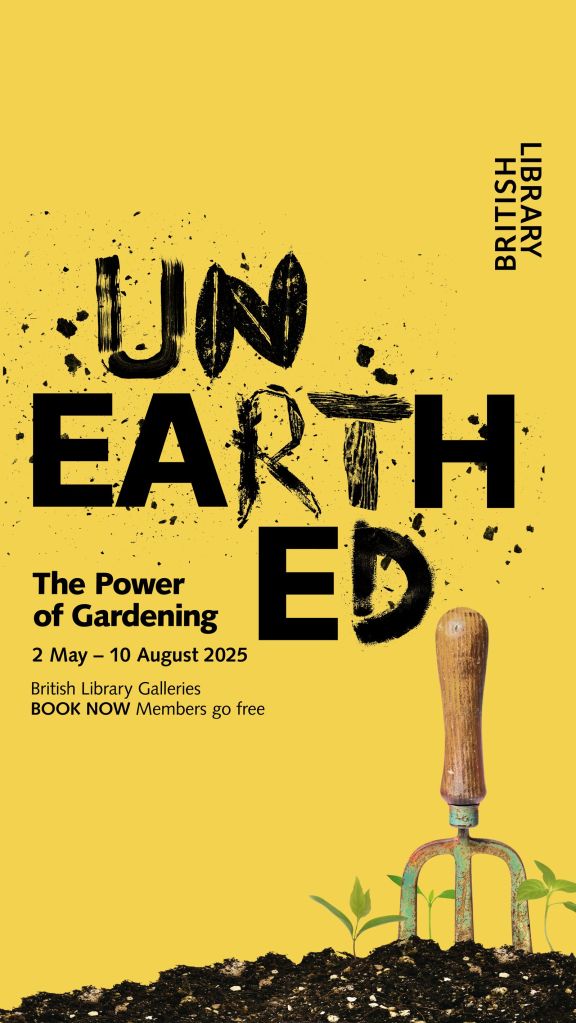
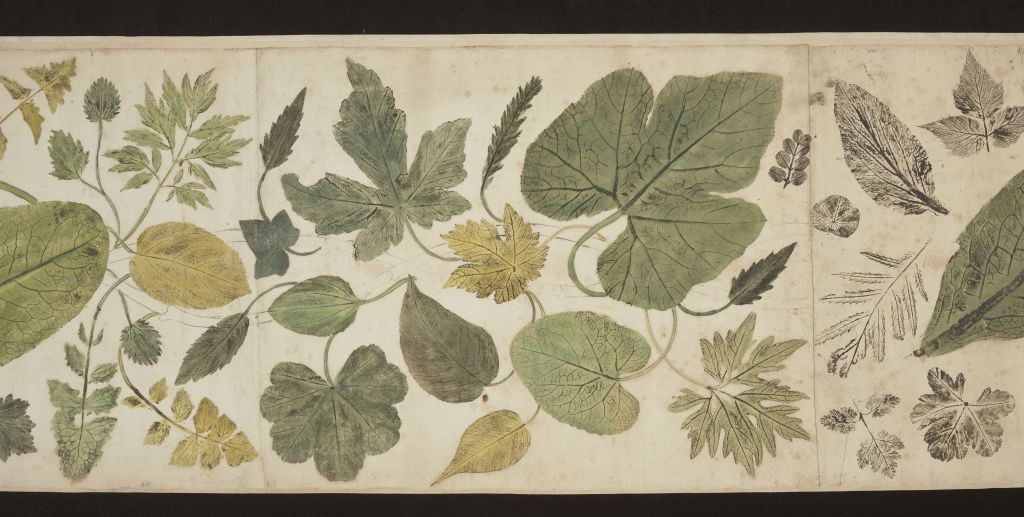
If you have the opportunity to visit the exhibition do take it. There is surprisingly little on the British Library website to give a taste of what it is like to be there so I will give an outline of my impressions. On entering the exhibition you are led through a series of spaces, all with fascinating divergent material, but linked by the overarching theme of gardening and by the raw wooden and shed/greenhouse like feel of the structures which separate and guide you through the spaces. As would be expected of a library, there were historically important rare books on display. These included: the only surviving illustrated collection of herbal remedies from Anglo Saxon England circa 1000-25; the first English gardening manual, which had the beguiling title A Most Briefe and Pleasaunte Tretease, by Thomas Hill 1563; one of Humphrey Repton’s ‘Red Books’ showing the way he used flaps and overlays to demonstrate how a landscape could be changed; and of course, many books of botanical art including the Hortus Eystettensis 1613.
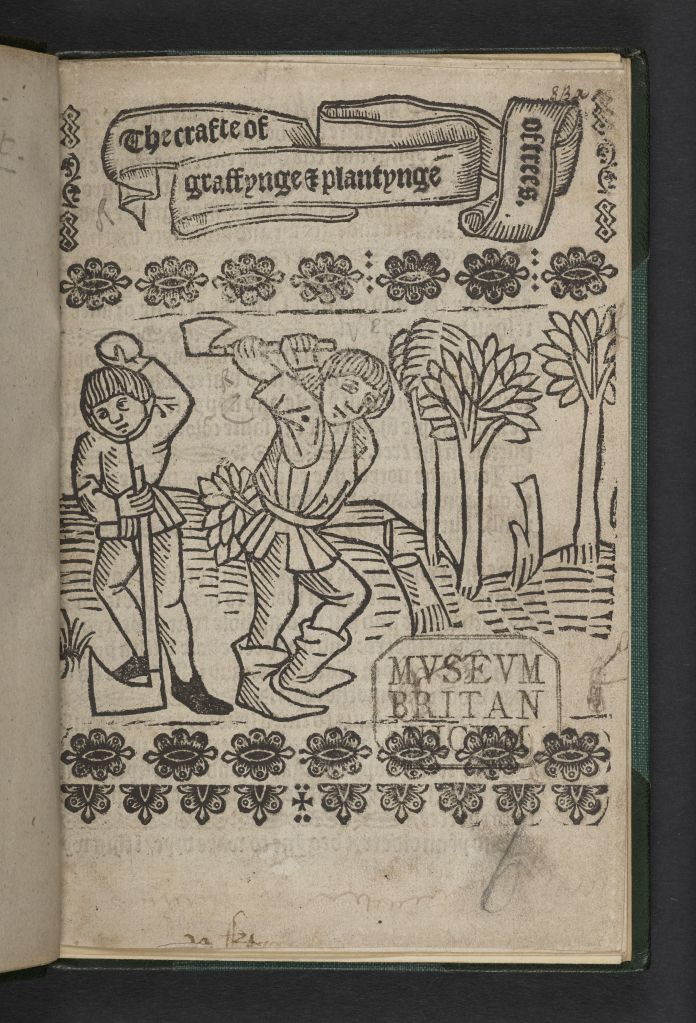
What was particularly striking about this as an exhibition in a library was the eclectic range of material objects on display as well. These were intriguing and did conjure up certain times and places. They included one of the only two surviving 19th-century Wardian cases (for protecting plants being transported by sea); the first lawnmower; and Gertrude Jekyll’s very robust looking gardening boots. There were many fascinating photographs and I was particularly struck by those depicting the colonial aspects of plant introductions that form so much of the current pallet of garden plants.

I have made this sound very historical but that was only one aspect of this multifaceted exhibition. Its aim to explore the “transformative, enriching and sometimes radical power of gardening in Britain and the impact it has on people, communities and the environment” was broadly met with plenty of space given over to contemporary ideas and movements. Thus, we are led through political movements such as the Diggers and True Levellers protesting the enclosure acts to the Garden City movement of the early 20th century and on to guerilla gardening and current developments in promoting community gardening and its positive impact on general health and wellbeing.
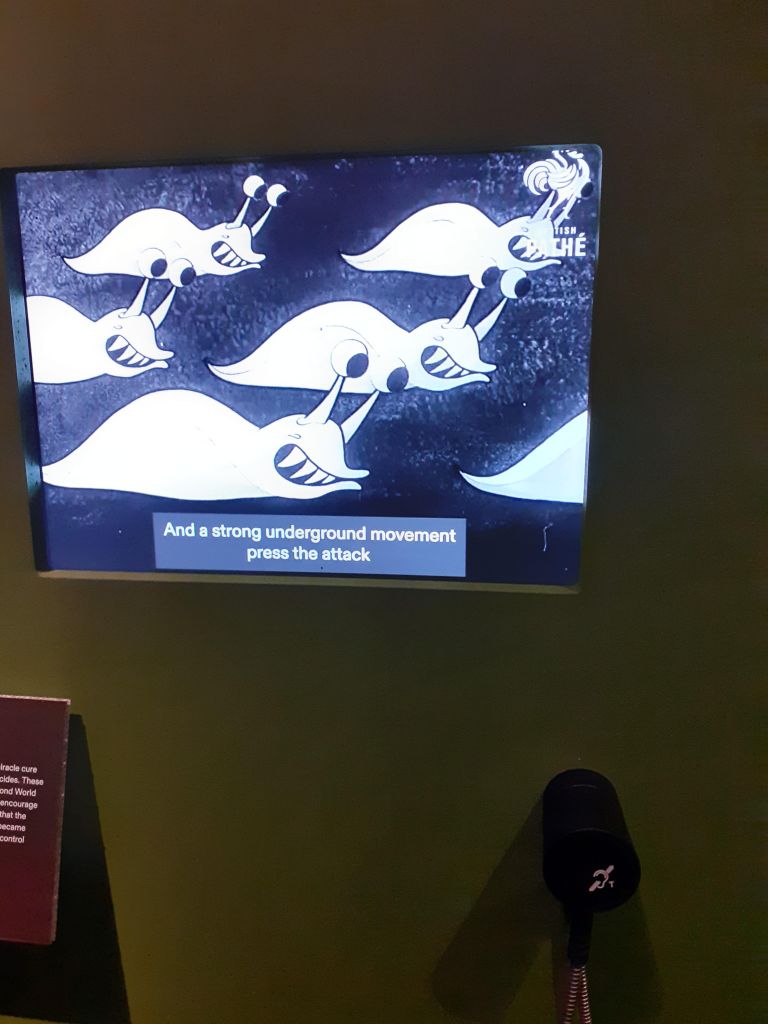
Something that worked better than I have ever seen in other exhibitions was the use of video. Rather than separating off dark spaces with a video plus sound running on a loop there were videos with subtitles lighting up walls here and there. Thus, beautiful gardens and people caring for them could be seen as background illustration as you walked around taking in other texts or objects or you could linger and see the whole film and read the subtitles. A smaller video showing an animation from a Pathe News reel in the ‘dig for victory’ years showed hordes of pests moving in to destroy crops until the humanised pesticide sprayer comes to the rescue. This struck both a humorous note and a clear juxtaposition with the exhibits relating to contemporary attitudes to plants and gardening and the interactive installation by Alexandra Daisy Ginsburg called ‘Pollinator Pathmaker’.
On environmental matters, the exhibition installation itself was the first where the British Library have been measuring carbon emissions. Most of the materials were bio-based and it was designed for easy disassembly for efficient re-use and recycling. The lead curator, Maddy Smith, should be congratulated on bringing together such an eclectic exhibition with powerful strands around the human history of gardening but also a real celebration of the power of plants.
 whitehorsepress