This essay by Jonatan Palmblad is the first in a series co-published with ICEHO in which emerging environmental history scholars respond to essays by foundational environmental historians whose reflections on the field are featured in Global Environment. Jonatan responds to here to Sverker Sörlin’s ‘Staying Open – Shaping Environmental History in Sweden’, published in Global Environment in February 2026.
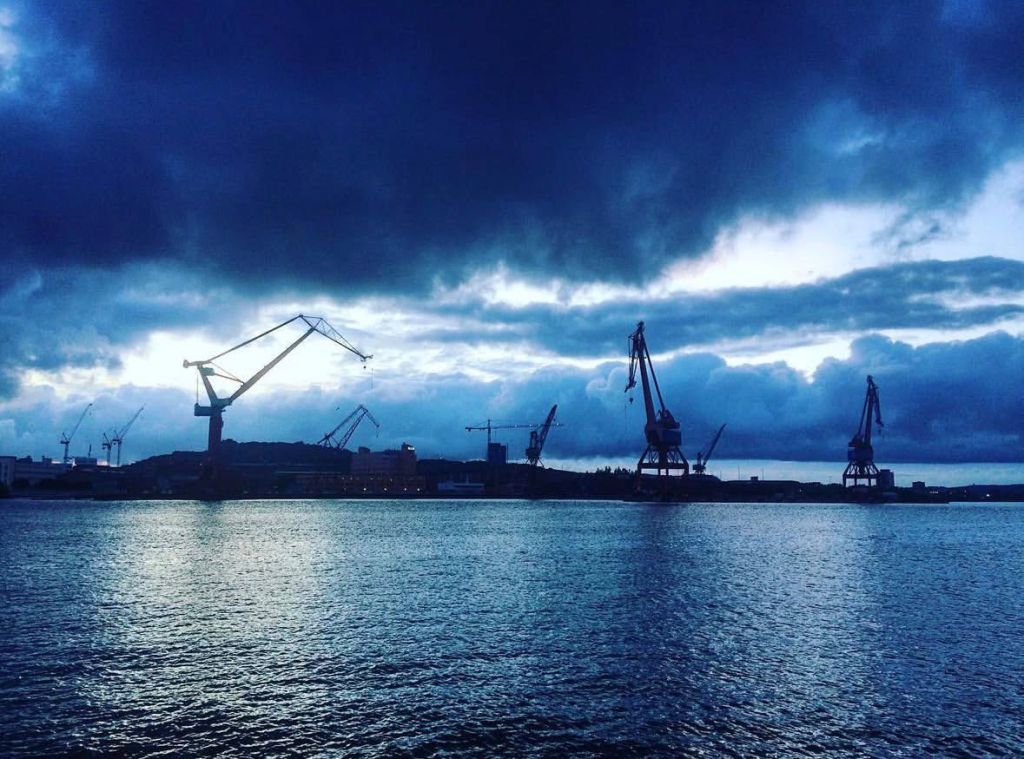
‘Environment’ is an interesting concept: add a word before it – like work, social or built – and it comes to signify a specific kind of place but, on its own, it has now become synonymous with what we sometimes still call the ‘natural environment’. To care for the environment, at least in languages like English and Swedish, has often become to care for the world ‘out there’, beyond the human sphere, in contrast to the places that environ most people. In environmental science, it has become a conceptual tool for talking about all of Earth, but it is also foundational for environmentalism, since it highlights the need to care for those biodiverse regions that few or no people inhabit. By the same token, however, it tends to ignore the fact that even a megalopolis is a natural habitat and environment, for humans and nonhumans alike, and that the city is as ecological as an old-growth forest – even if dysfunctionally so. It therefore seems to me that, though well-intended, the contemporary idea of the environment also risks reinforcing the conceptual separations that environmental historians so carefully have deconstructed: nature and culture, nature and humanity, nature and city. Environment can mean many things, but whenever it excludes human surroundings like our social, built, or work environments, it risks alienating our everyday lives, places, and practices from the ecology that is all around us.
And yet, ‘environment’ remains both a useful and important concept – it is just that we need to approach it critically. While environmental historians like myself have dissected ‘nature’ and ‘wilderness’ many times over, I have therefore come to believe that we should pay more attention to the very word that prefaces the history we write. Luckily, some historians, like my compatriot Sverker Sörlin, have ventured to do just that. I write this essay in response to Sverker’s recent article, ‘Staying Open – Shaping Environmental History in Sweden’,[1] and I will reflect upon how our rather similar academic paths have led us toward somewhat different environmental notions.
Among Sverker’s many publications is The Environment: A History of the Idea (2018), co-written with Paul Warde and Libby Robin – a fabulous book of great service to anyone who wants to understand the concept – and, together with Nina Wormbs, he has developed a theory of how to better understand and use this monumental idea.[2] The environment is something we humans create through our diverse technologies, Sverker and Nina argue, and it helps us understand the complexity of the world with which we interact. It is in this light that Sverker in the essay to which I respond asks: ‘Where does the environment come from, after all? Was it always there?’, to which he answers: ‘No, it is of our own making. We are an environing kind.’[3] My own answer, however, would be rather different: yes, it has always been there, because we – like all other organisms – are an environed kind. It is not that I disagree, but that Sverker and I have come to focus on two different ‘environments’ in history – one invented before and one after the mid-twentieth century. My environment is the correlate of an organism, amounting to its environment, while Sverker’s is the environment. These environments are quite different, but both can serve us when trying to make sense of the world around us.
In what follows, I will describe how I arrived at a partly different but complementary way of doing environmental history, by outlining my own academic history and how my environment shaped my ideas. Unlike Sverker, I have not been a part of creating and shaping the field, neither in Sweden nor internationally; my story instead shows how a student could reap the fruits planted by him and others.
To tell my own story, I must begin with my ‘academic prehistory’ and my first environment: my hometown of Gothenburg, Sweden. A quaint city of half a million people, it is nevertheless Sweden’s second largest, with a vibrant culture and music scene. Before I entered university in 2012, I dedicated most of my energy to writing and playing punk music of the faster kind. At age 16, I started my first band, Civil Olydnad (‘civil disobedience’), a name that at least partly was inspired by Thoreau’s classic essay. I built no cabin in the woods, however, but sustained my economically unsustainable music career by taking jobs at warehouses, train stations and music venues. Looking back, I am quite glad to have left those jobs behind, but also to have gained experiences of the work environments of logistics, maintenance and physical labour that many academics lack. Moreover, my punk phase never really ended, since I brought the attitude of do-it-yourself, mutual aid and the questioning of tradition and authority with me into my academic life. We toured Europe and Brazil, which early on made me appreciate the diversity of people and their environs around the world. Civil Olydnad still exists, but my academic career is to blame for our inactivity in recent years.

Figure 2. Civil Olydnad in 2012. I stand on the far left, environed by the other organisms in my band, a photographer and urban rubble. This desolate place, too, is an environment – for us and a few other life forms. Coincidentally, this was also my work environment, just outside the warehouse where I worked as a forklift operator. Photo: Emily Macgregor.
Although I had long thought about studying something, every opportunity made me think about how that same path would also limit my future options. Perhaps I would still have been toiling, doing the important and largely invisible labour that makes our societies run, had it not been for a new programme at the University of Gothenburg. It was called Liberal Arts and it offered a broad curriculum of subjects, from ancient languages, philosophy, logic and history to biology, cognitive science, geology and astronomy. I had no idea where such an education would lead, but that uncertainty – nay, opportunity – made me quit my day job and enroll. It was not an easy choice to go from receiving a salary to surviving by means of mounting student debt, but thanks to Swedish universities being public, with free tuition, I was able to take this risk.
The programme was not merely one of the humanities in the plural sense, but also one rooted in humanism. Trying to understand the human condition and finding ways to improve myself through learning broadly awoke a curiosity for all subjects, and I cannot imagine a more comprehensive education. To my great dismay, however, a professor told me that I should enjoy the possibility of reading broadly while I still could because, if I wanted to have an academic career, I would have to specialise in one subject and one subject only. I ended up taking this not as an advice, but as a challenge: sure, we need to specialise to some extent, but do we not also need to retain a broad and diverse understanding of the world? A generalist may become a ‘jack of all trades, master of none’; but, as someone once quipped, it may be ‘better than a master of one’. Samuel Butler (1835–1902) therefore put it well: ‘Woe to the specialist who is not a pretty fair generalist, and woe to the generalist who is not also a bit of a specialist.’[4] Just knowing a little about a lot might make us dilettantes, but knowing a lot about a little can give us tunnel vision.
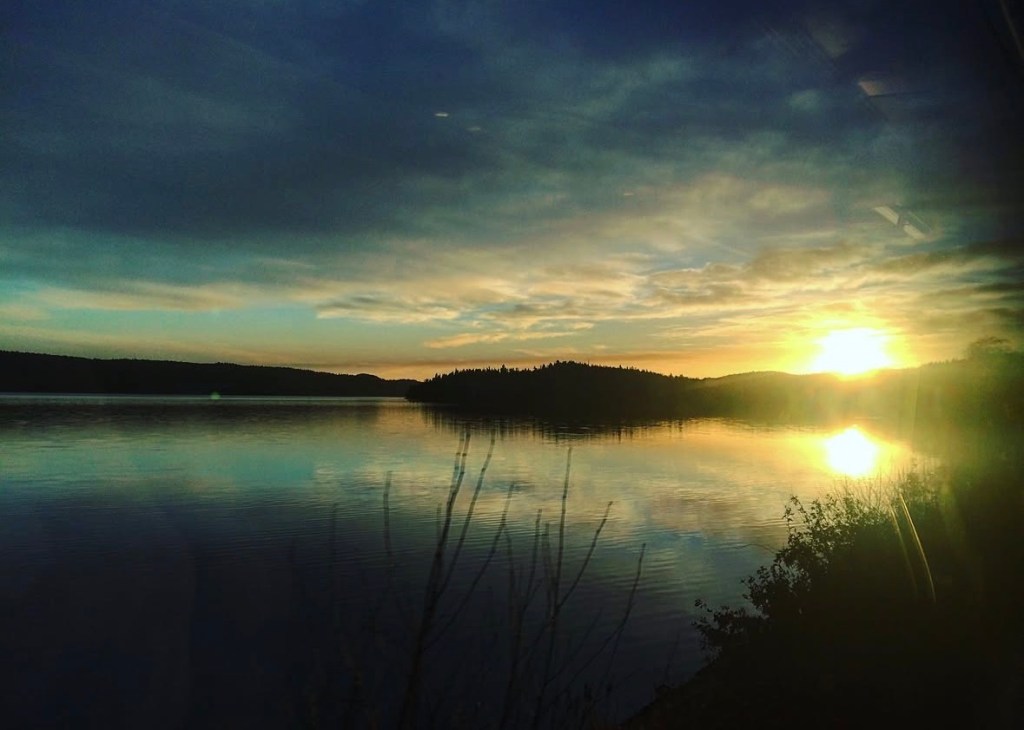
My liberal arts programme discussed the place of humanity in the universe as well as the nature of the universe itself but, despite its disciplinary diversity, one subject was missing: ecology. In 2014, a year and a half into the programme, I therefore decided to dedicate a full semester to human ecology. During that semester, I was pondering the relationship between ecology and the humanities, fantasising about a new synthesis: should humanists not think more about ecological questions, and could ecologists not learn something from humanists? Little did I know that Sverker and others were doing exactly this, establishing the now well-known field of the environmental humanities.
Still ignorant of the environmental humanities, I began musing on what ‘environment’ really signified. Human ecology emphasised that we humans are not external to nature, but rather must be understood as ecological beings environed just like any other organism. I stopped thinking of the environment as ‘out there’, instead thinking of it as that which environs me – a human animal and organism. I learned to ecologise humanity, to estrange myself a bit from some of my humanist ideas, but I also insisted on humanising ecology by maintaining a human(ist) outlook. Moreover, I had just become the philosophy department’s student representative for the ‘psychosocial work environment’, an extracurricular activity that made me ask: is there really a difference between such an environment and that of ecological relations? ‘No’, I concluded; ‘my environment includes anything that environs me, whether material or mental, ecological or social, nonhuman or human.’
Three years of liberal arts made me into an incipient generalist scholar, but methodologically I had become a philosopher and a historian. In 2015, I therefore decided to study a master’s in the history of ideas, embedded in an interdisciplinary programme in ‘critical studies’ at the University of Gothenburg, where I finally learned about the environmental humanities. My intellectual environment at this time turned out to be very favourable, since researchers across the humanities faculty were converging around ecological topics. One of my lecturers, the historian Björn Billing, offered a new course that introduced me to environmental history as well as ecocriticism and, even though I was an undergraduate, I was invited to postdoctoral seminars on ecological topics and could take a Ph.D.-level course on the environmental humanities. What is more, the Australian environmental historian Christine Hansen was starting an environmental humanities network at the university and hired me to help coordinate it, and Helmuth Trischler – the co-director of the Rachel Carson Center in Germany – gave a keynote at its inauguration. Gothenburg was becoming a real hub for the environmental humanities, and I suddenly found myself in an intellectual environment in which people gravitated around ecological topics. This was true for Sweden at large, I think, because Linköping University had in 2015 received a large grant for creating a centre for the environmental humanities, which they dubbed The Seed Box, and which both supported and inspired scholars at other universities.
My appetite for environmental topics soon outgrew the many opportunities of my environment, however, and so I ended up taking an online course on the Anthropocene by the interdisciplinary historian of technology Finn-Arne Jørgensen, who was then at Umeå University. I wrote my first essays in English in this course, and I later wrote my MA thesis in English as well, while scanning the horizon beyond Sweden and Scandinavia. It all culminated in an internship at the Rachel Carson Center, where in 2017 I met its other director, Christof Mauch. Encouraged by Christof, Helmuth and the geographer Kimberly Coulter, I at last left Gothenburg for Munich – a move that would eventually lead to a Ph.D. in the environmental humanities.
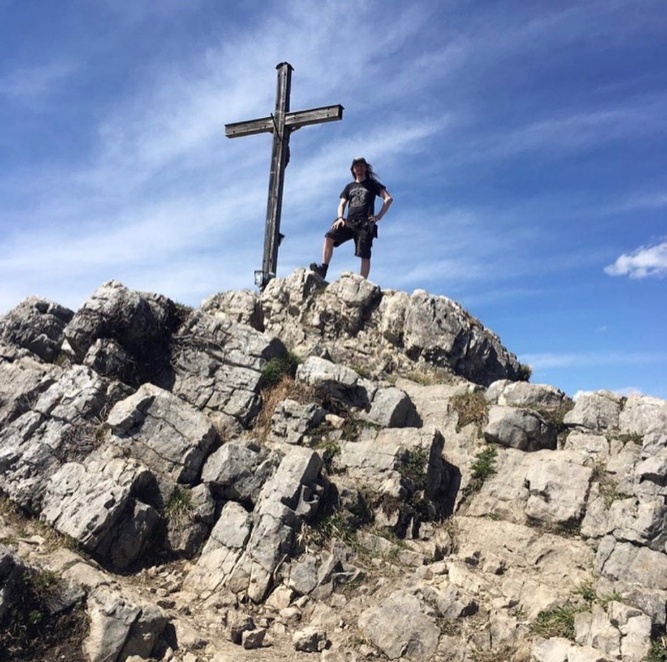
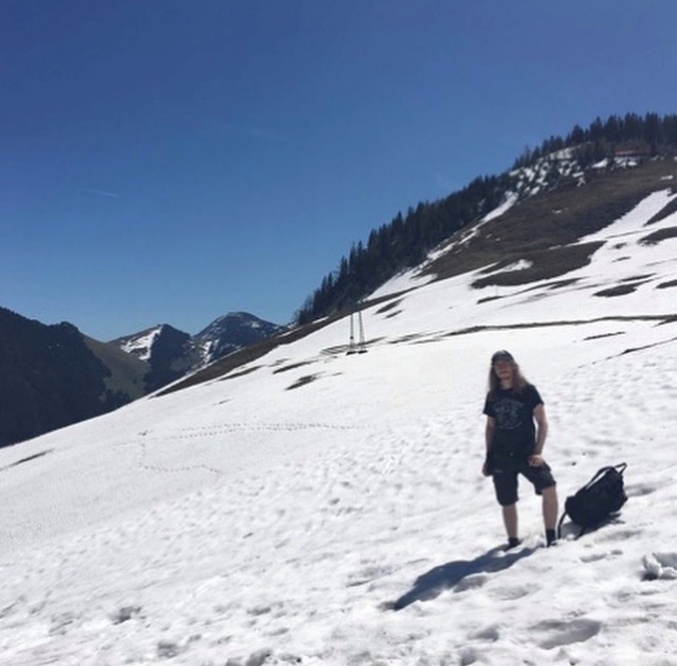
Doing a PhD at the Rachel Carson Center was a great privilege; even more so with Christof and Helmuth as my supervisors. Throughout my Ph.D., which I wrote between 2018 and 2023, the center attracted environmentally minded researchers from all over the world, and I gained many friends and contacts – even more so since I also worked at fifty per cent as the managing editor of Arcadia, the center’s environmental history journal. I got to present at conferences of environmental history around the world, and I first met Sverker when he chaired my panel at the 2019 World Congress of Environmental History in Florianópolis, Brazil. To my great relief, moreover, my supervisors allowed me to be as interdisciplinary as I liked. My dissertation was historical enough for a degree in environmental history, which was an option at the Rachel Carson Center, but in the end I opted for one in the environmental humanities since, well, I really did not want to specialise. I still needed a topic, however, and so I found a loophole: I focused on Lewis Mumford (1895–1990), one of the twentieth century’s great generalists, and used him as an interdisciplinary prism for understanding human–environment over time. I finished my dissertation after a fellowship at the Konrad Lorenz Institute for Evolution and Cognition Research in Vienna, and the end product was a defence for the use of historical ideas when addressing the contemporary ecological crisis.
Mumford and other ‘organicists’ in the first half of the twentieth century had a very different understanding of ‘environment’ from that which emerged after the Second World War. The word stems from French environnement, but the older notion also had a conceptual history in milieu, which could signify the world in relation to an individual organism.[5] As Mumford would put it in the 1970s: ‘there is no such thing as an organism without an environment, just as there’s no such thing on earth as an environment without an organism.’[6] The advantage of this pluralistic and relational view, rather than a monolithic understanding of the environment, is that its interdisciplinarity stretches even beyond ecology and climate: any scholar or scientist who studies concrete phenomena can – and often does – use the term in this sense. When physicians and psychologists talk about how humans are positively or negatively affected by what surrounds them, when historians of ideas talk of the intellectual milieu, and when architects study the layout of buildings as a human environment, they are all talking the same language – even when ecology is not on their mind. Environmental historians can inform and be informed by any discipline that takes on such a view. Importantly, this use means that human–environment interaction never precludes human–human interaction, meaning that social and ecological concerns cannot be separated.
In this light, all my former environments came together: as a worker, a musician, an academic a hiker – as anything I ever was – I had always been environed. As historian Thomas Carlyle (1795–1881), who in the 1820s coined ‘environment’ in English, once wrote: ‘Shakespeare says, we are creatures that look before and after: the more surprising that we do not look round a little, and see what is passing under our very eyes.’[7]
In practice, my ‘older’ notion of environment therefore means that, when I study humans in history, I look at them as organisms interacting with their surroundings in all kinds of ways – including but not exclusively those relating to biodiversity and climate. All historians contextualise and, as an environmental historian, I emphasize that context isenvironment, whether we describe it as natural, cultural, intellectual or otherwise. If the contemporary understanding means the planet as we understand and modify it, in all its ecological and climatic complexity, the older one helps pinpoint the particular relations between individual organisms – human and nonhuman – and the world around them. One came into being with humans modifying, studying, and imagining the world; the other emerged from the primordial ooze together with the first unicellular organism some 3.7 billion years ago. The first use, which Sverker has helped develop, shows how we humans actively ‘environ’ and make the environment, while the other investigates in what ways we, as all organisms, have always been environed.
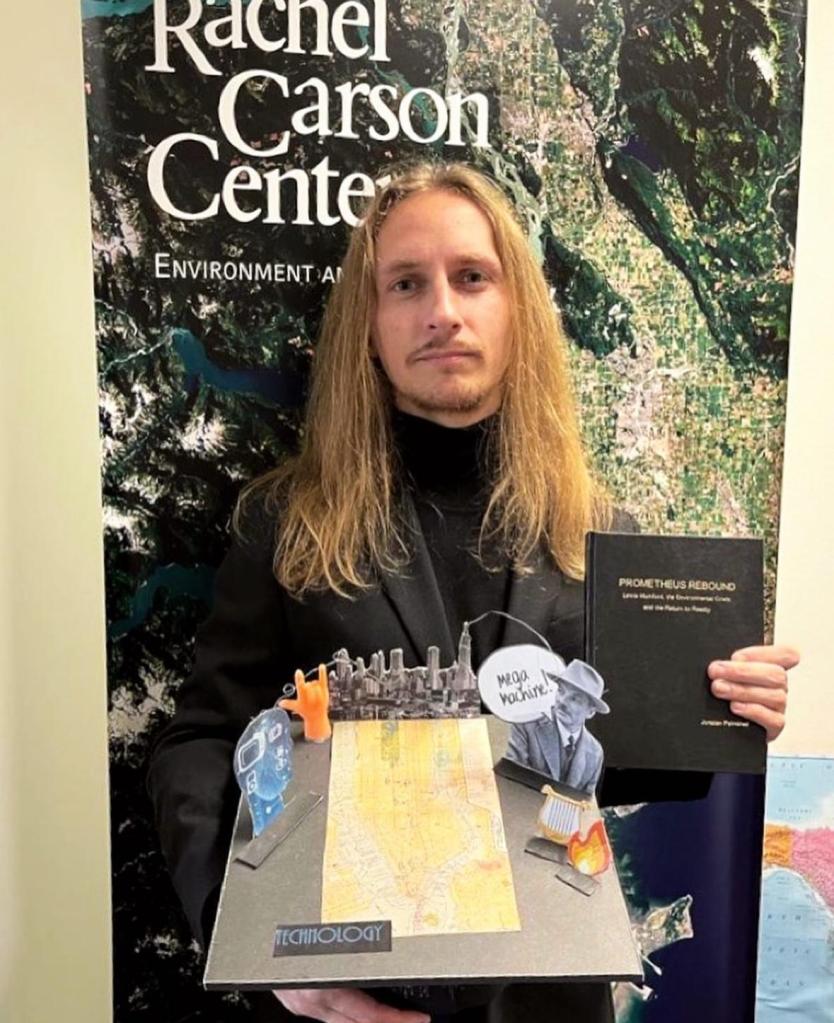
Today, in 2026, I wouldn’t lie if I were to call myself an environmental historian, but I would also not be telling the whole truth. Sometimes, I therefore say that I am both more and less. As an environmental humanist, my research interests go far beyond this already ample field, and I find disciplines like cognitive science, psychology and philosophy essential for how I understand my environment. But generalism has its trade-offs, and colleagues who identify more with environmental history are also much more knowledgeable and well-read in it than I am. And still, whatever I study I relate to my understanding of ‘environment’ in history. The label ‘environmental humanist’ perhaps fits me more aptly, but the environmental humanities are still (and perhaps by nature) too diverse for a coherent community to take form. Given what scholars I mostly surround myself with and the fact that I research human–environment interaction over time, I therefore am and remain an environmental historian too.
To bring this reflection to a close, I find it peculiar but also instructive that Sverker and I have come to focus on different environments when doing history; instructive because it shows how different approaches are possible, and peculiar because we have so much in common. We both studied the history of ideas and human ecology, we are both interested in how technology modifies our relation to the world, and we are both generalist scholars in the environmental humanities who have found a home in the field and community of environmental history. In one sense, such interdisciplinarity might be typical for Swedish environmental historians. Like Sverker attests in his article, the field never became a distinct discipline in Sweden, much because he decided to stay open – and this undeniably paved the way for my own interdisciplinary and international path into academia. I therefore remain grateful to the trailblazers and the various environments of history: the different notions as well as those environs that at different points surrounded me, teaching me to see the world as a historian, a humanist and a human organism.
[1] S. Sörlin, ‘Staying open – shaping environmental history in Sweden’, Global Environment 19 (1) (2026): 242–57.
[2] S. Sörlin and N. Wormbs, ‘Environing technologies: A theory of making environment’, History and Technology: An International Journal 34(2) (2018). Another recent contribution that historicises ‘environment’ is Etienne Benson’s Surroundings: A History of Environments and Environmentalisms (Chicago: University of Chicago Press, 2020).
[3] Sörlin, ‘Staying open’, p. 256.
[4] S. Butler, The Note-Books of Samuel Butler, ed. by H. Festing Jones (New York: E.P. Dutton & Co., 1917), p. 222.
[5] Cf. G. Canguilhem, ‘The living and its milieu’, trans. John Savage, Grey Room 3 (Spring 2001 [1952]), 6–31.
[6] L. Mumford, in A. Chisholm, Philosophers of the Earth: Conversations with Ecologists (London: Sidgwick & Jackson, 1972), p. 4.
[7] T. Carlyle, Sartor Resartus (London: George Bell & Sons, 1898 [1834]), p. 5.
 whitehorsepress
One thought on “The Environments of History: An Account by a Human Organism”