Conceptualising Small Watersheds as Infrastructures of Immobility to Address Distress Induced Rural-Urban Migration in India

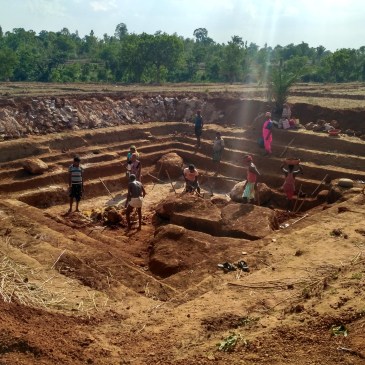
In this blog, originally published as one of the inaugural Environment and History ‘Snapshots’ in February 2022, Shashank Deora and Pankaj Sekhsaria discuss rural to urban distress-migration in India and the role small watersheds might play as ‘infrastructures of desirable immobility‘ INTRODUCTION India has witnessed growing urbanisation and increased domestic rural-urban migration over the last … More Conceptualising Small Watersheds as Infrastructures of Immobility to Address Distress Induced Rural-Urban Migration in India
Degrowth – an emerging concept questioning the basis of our current economic model

In today’s blog, Leonard Creutzburg gives a brief summary of the concept of Degrowth, which is the basis of his current article in Environmental Values, ‘Growing Trees for a Degrowth Society: An Approach to Switzerland’s Forest Sector’ “We are in the beginning of mass extinction, and all you can talk about is money and fairy … More Degrowth – an emerging concept questioning the basis of our current economic model

ESEH Roundup of European Environmental History Conferences in 2021

This blog reporting three exciting regional environmental history conferences held in 2021 appeared as the ESEH Notepad in Environment and History 28.1 (February 2022). Congratulations to the convenors on these successful events! Istanbul Unbound: Environmental Approaches to the City Istanbul Research Institute – Pera Museum. K. Mehmet Kentel (on behalf of the organising committee) Istanbul … More ESEH Roundup of European Environmental History Conferences in 2021

Sustainability of what and for whom?

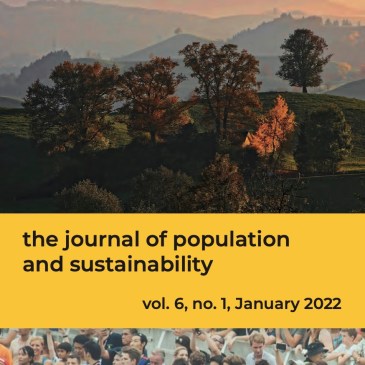
To mark the publication of the inaugural issue of The Journal of Population and Sustainability (JP&S) with The White Horse Press, in this blog, JP&S editor David Samways questions the meaning of ‘sustainability’ and its implications for different populations.  About 15 years ago my partner and I installed a wood burning stove. At the time … More Sustainability of what and for whom?

Feeding Fish to Factory Farms

In this blog, Floor Haalboom introduces her thought-provoking Environment and History article ‘Oceans and Landless Farms: Linking Southern and Northern Shadow Places of Industrial Livestock (1954–1975’, recently made Open Access. A ‘radical change’ in the diet of farm animals attracted the interest of the Dutch Health Council – a body of experts advising the Dutch … More Feeding Fish to Factory Farms

Elemental and Ephemeral Encounters with the Man of Stones

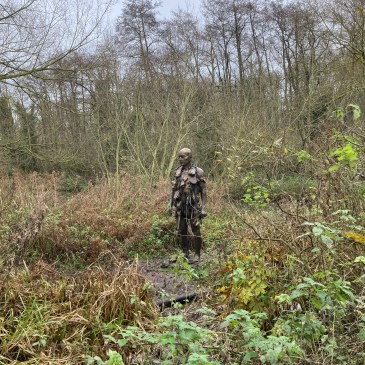
In today’s blog, Tom Greaves, who will take over as editor of Environmental Values in January 2022 reflects on what an unusual new acquaintance has taught him about the interplay of the elemental and ephemeral in the lived experience of nature and place. In recent weeks I’ve made an unusual acquaintance. The Man of Stones is an … More Elemental and Ephemeral Encounters with the Man of Stones

ECOTONE SCHOLARSHIP AND STRUCTURAL CHANGE

In this blog, originally published as the ICEHO pages in Global Environment 13.3 (October 2021), Shannon Stunden Bower proposes the need to think anew about the relations between environmental history, policy change and systems change. In spring 2011, environmental historians and historical geographers gathered in southern Ontario. Their meeting was organised by the Network in … More ECOTONE SCHOLARSHIP AND STRUCTURAL CHANGE

H2O in Gaza

In this blog, Troy Sternberg, geographer and sometime White Horse Press author of both books and articles in Nomadic Peoples reports on his experiences In Gaza, filming for the current BBC4 series H20: The Molecule that Made Us. (All images courtesy of Freddie Claire). Walking into Gaza – well there is no such thing. After … More H2O in Gaza