Mimicking Lyrebirds in Multispecies History

In this blog, originally published as a ‘Snapshot’ in Environment and History (May 2024), Ruby Ekkel investigates Superb lyrebird mimicry and its evolution due to environmental change and human intervention in their habitat. Here, the lyrebird is a multispecies historian, whose imitations provide mediated insights into the changing ecosystems of which it is part. On … More Mimicking Lyrebirds in Multispecies History

Decolonising Plant Relations Through Creative Practice

In this blog, Kristina Van Dexter, Creative Submissions co-editor (with Prue Gibson) of Plant Perspectives reflects on her deep engagement with the relations and languages of plant life that compose forest-worlds. Listen closely to the language of the forest – the decay and decomposition, the generative relations of fungi and roots, the rhythmic comings and … More Decolonising Plant Relations Through Creative Practice

HAUNTED VEGETATION: FORMERLY GERMAN ORCHARDS IN POLISH POMERANIA

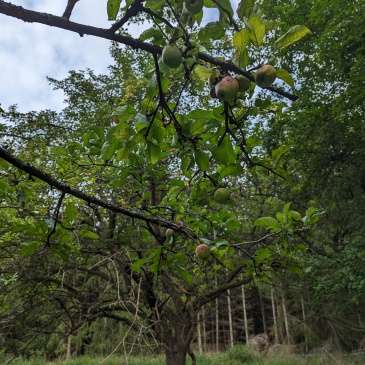
In today’s blog, previously published as a ‘Snapshot’ in Environment and History 30.1 (February 2024), Karolina Ćwiek-Rogalska employs a hauntological approach to abandoned Pomeranian orchards in present-day north-western Poland, to explore the effects of post-1945 population migrations. This essay employs a hauntological approach to explore the effects of post-1945 mass migrations in Central Europe, particularly … More HAUNTED VEGETATION: FORMERLY GERMAN ORCHARDS IN POLISH POMERANIA

INEQUALITIES IN THE LAND: COLONIAL LEGACIES AND THE QUEST FOR LAND EQUITY IN ZIMBABWE

In this blog, originally published as the ICEHO pages in Global Environment 17.1 (February 2024), Admire Mseba outlines attempts to address land inequalities in postcolonial Zimbabwe, arguing that such efforts often ‘essentially ignore longstanding forms of inequality, anchored in systems of power with deep roots in the precolonial past and reinforced by colonial policies’. In … More INEQUALITIES IN THE LAND: COLONIAL LEGACIES AND THE QUEST FOR LAND EQUITY IN ZIMBABWE

Plant Perspectives – New Creative Submissions editor, Prudence Gibson

We are thrilled that Prudence Gibson has joined the Plant Perspectives team as Creative Submissions Editor, jointly with Kristina van Dexter. The journal’s first issue showcased exciting creative work and we are sure that, under Prudence and Kristina’s leadership, this element will flourish even more. The journal’s submission system is here. In recent decades, artists … More Plant Perspectives – New Creative Submissions editor, Prudence Gibson

Entire of Itself? Towards an Environmental History of Islands

In this blog, Milica Prokić and Pavla Šimková introduce their just published edited volume Entire of Itself? Towards an Environmental History of Islands, which is available in both print and Open Access digital format. What role has the environment played in the history of islands? Is there even such a thing as environmental history of islands? … More Entire of Itself? Towards an Environmental History of Islands

THE EMERGENCY HAS ALREADY HAPPENED

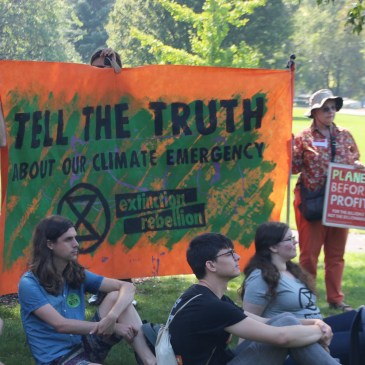
In this blog, originally published as a ‘Snapshot’ in Environment and History, Rebecca Duncan, Eleonor Marcussen, Mike Classon Frangos and Emily Hanscam critically interrogate the semantics and usefulness of the concept climate ’emergency’. The sense of emergency is palpable and real. But instead of naming this moment a ‘state of exception’, we should see it … More THE EMERGENCY HAS ALREADY HAPPENED

The environmental impact of mass tourism: A case study of Negril, Jamaica, 1970s-2023 

In today’s blog, Henrice Altink introduces her new article in Environment and History (online first February 2024), ‘Making Tourism Sustainable? Environment and Resort Tourism in Negril, Jamaica, 1970s–2002’. Mass tourism has had severe environmental impacts but there are hopeful signs that sustainability is becoming central to the development agenda in the 2020s. Mass tourism generates … More The environmental impact of mass tourism: A case study of Negril, Jamaica, 1970s-2023 

Representations, traces, vital agents: why images matter to environmental history

In this blog, first published as the ICEHO pages in Global Environment (16.3, October 2023), Finis Dunaway ruminates on the importance of images in environmental history as ‘representations, traces and vital agents’ that ‘historians can … use … as primary sources [that] played an active role in the making of the environmental past’. Dunaway is … More Representations, traces, vital agents: why images matter to environmental history