In today’s blog, John C. Ryan, editor of Plant Perspectives, ruminates on the power, intelligence and empathy of plants – and invites submissions to The White Horse Press’s new interdisciplinary plant humanities journal.
The exciting identification of Asia’s tallest tree, a 102-metre cypress in Tibet’s Yarlung Tsangpo Grand Canyon, calls attention to how we monumentalise plants, especially those that would ‘tower over the Statue of Liberty’ (if given the chance), as described in a Live Science article on the discovery.
The world’s second tallest tree inhabiting the world’s deepest canyon evokes the uncharted mysteries of the arboreal world yet also reminds us of the hierarchies governing our view of plants. Consider, for instance, the strong cultural attention placed on the Hyperion redwood of California in comparison to the relative obscurity of the Pando aspen colony of Utah – the former, sublimely vertical, the latter, profoundly horizontal.
The story of Asia’s tallest tree also brings to mind the technologisation of the botanical through the use of radar, lasers and drones to determine the cypress tree’s exact dimensions. Does such a focus on monumentality support broader biodiversity conservation concerns by inciting our imagining of plants? Or does it divert attention from the accelerating global loss of biodiversity – much of which exists at a dramatically smaller scale? And how will technology continue to structure our appreciation of plant life in the post-digital age of AI and quantum computing?
These and other questions resonate with the aims of The White Horse Press journal Plant Perspectives that I edit with Dr Isis Brook.
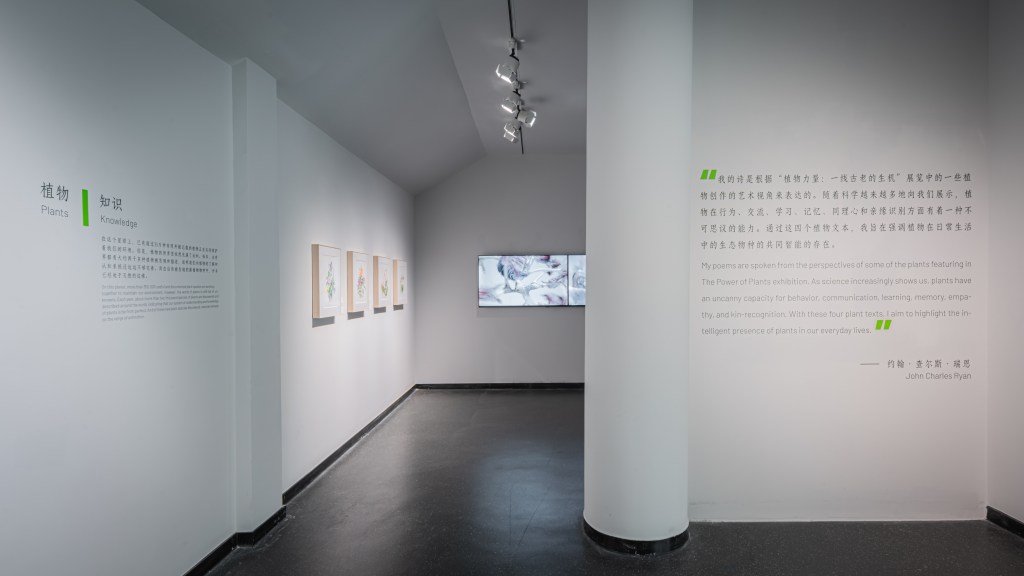
Some of these questions also arose for me recently while writing poetry for the exhibition ‘The Power of Plants: An Ancient Vitality’, curated by Zhang Ting and held from May–July at Being Art Museum in Shanghai. The show featured a strikingly diverse range of traditional and contemporary Chinese botanical art – from illustrations and paintings to installations and digital art. The poems I contributed are spoken from the perspectives of plants included in the exhibition. Projected on the gallery floor, the narratives aimed to foreground the sentient presence of plants that has inspired human creativity for ages.
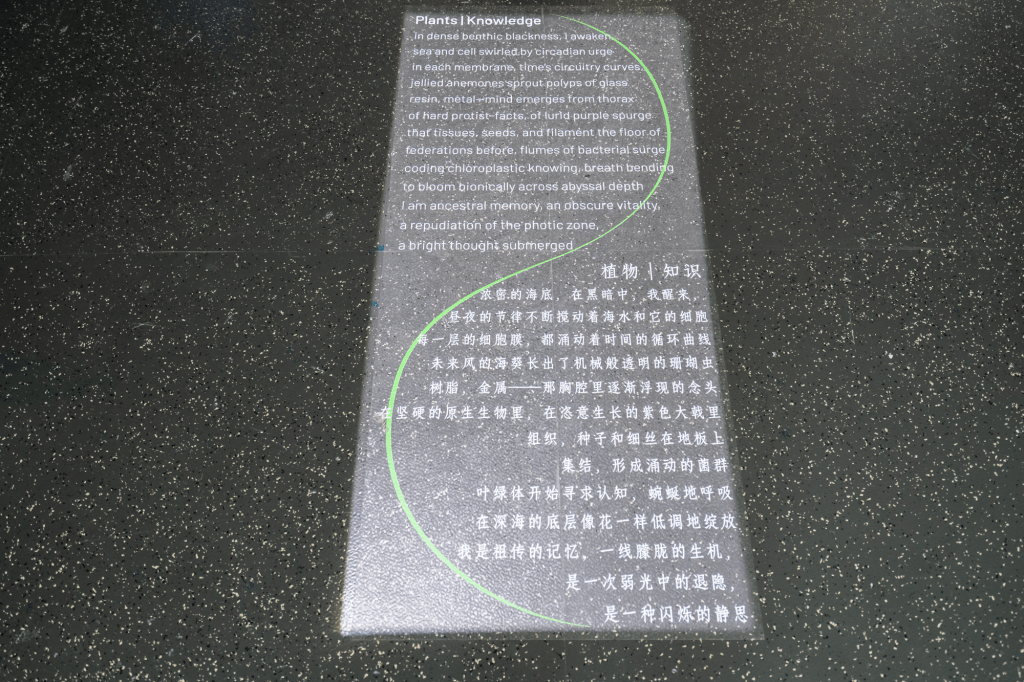
As science demonstrates, plants have an uncanny capacity for behavior, communication, learning, memory, empathy and kin-recognition. In many ways, our growing awareness of their percipience is redefining longstanding notions of intelligence itself. Indeed, my recent phytopoetry written in this vein appears in the latest issue of the Western Australian journal Limina.
Inspired by plant intelligence, in June I facilitated botanical writing workshops in India (online) and Finland (in-person). The Finnish workshop took place at the University of Oulu Botanical Garden, arguably the northernmost plant research institution in the world. Easy access to the collections significantly enhanced our immersion in plantness. The session concluded with a botanical writing open mic in the greenhouse with poems in Finnish and English (after clicking the last link, you can scroll down the Facebook page for photos). Around this time, I also convened the inaugural Nordic Plant Humanities Symposium with distinguished plant researchers, writers and artists Dawn Sanders, Annette Arlander and many others. The second half of the symposium, which focused on international perspectives on the plant humanities, included presentations by our own Isis Brook (Deputy Editor), Clare Hickman (Associate Editor) and Subarna De(Reviews Co-Editor)!
With James Rice of WHP in July, I participated in the Multispecies Ethnography and Artistic Methods conference session on ‘Artful Publication in Academia’. The discussion brought to the fore the challenges involved in creative, non-traditional or ‘artful’ publishing such as the peer review process and identifying a submission’s unique contribution to knowledge.
On that note, submissions for the inaugural issue of Plant Perspectives will close on 1 September 2023. We encourage traditional research articles as well as creative investigations of the botanical world that place the plant at the centre of enquiry.

