This blog reproduces the editorial by editors Franz Mauelshagen, Nicola Di Cosmo and Eleonora Rohland of the first volume of the peer reviewed Open Access journal Climates and Cultures in History, which was finalised in December 2024. It sets out the vision of the journal and invites new submissions (via our online system). It is guaranteed that there will be no author fees for any papers submitted before the end of 2025.
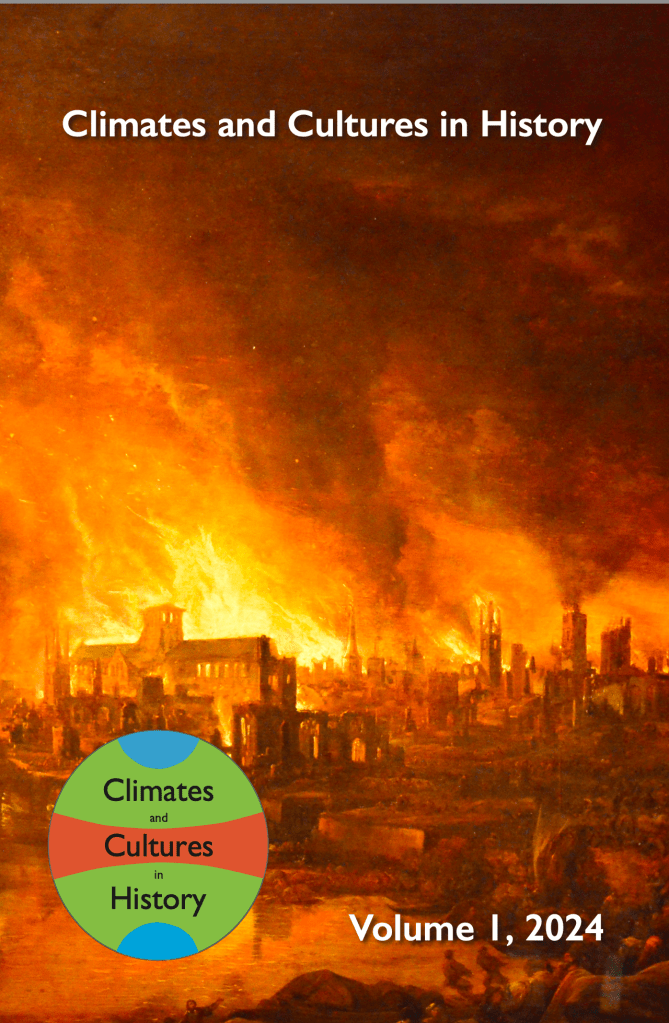
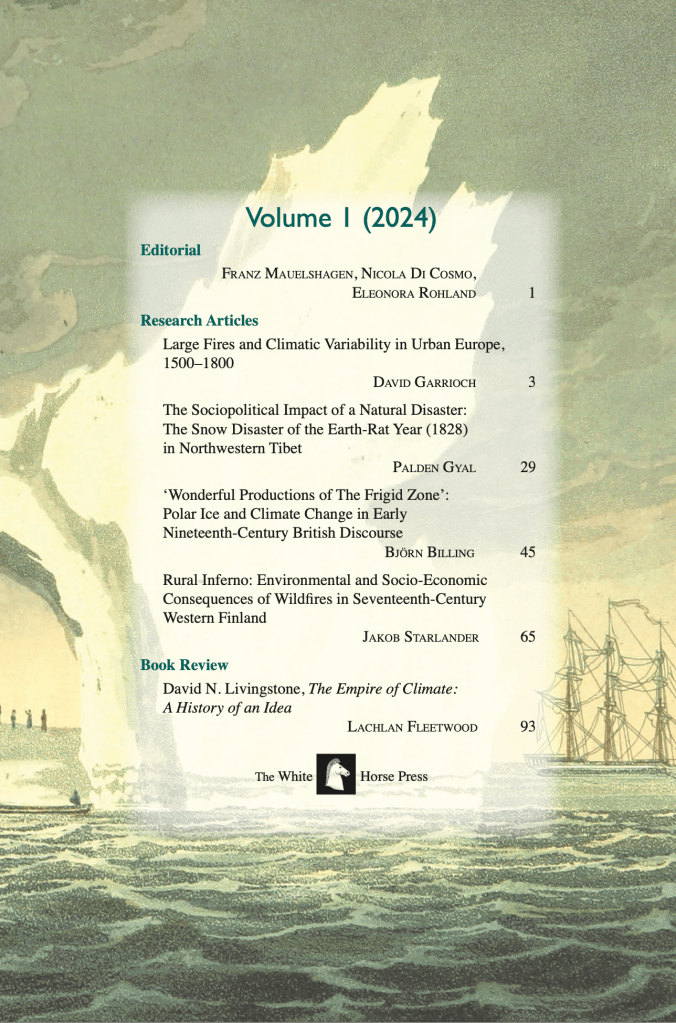
We are delighted to introduce the inaugural volume of Climates and Cultures in History (CCH), a new peer-reviewed open-access journal published by The White Horse Press. The journal emerges from the growing recognition of the need to explore the complex and multifaceted relationships between climate and human societies throughout history. By providing a dedicated forum for this vital field, we aim to advance understanding, foster dialogue and create a space where scholars from diverse disciplines and perspectives can come together.
CCH invites contributions spanning all historical periods and geographies, from the archaeology of ancient civilisations to the modern era’s political and cultural responses to climatic change. It seeks to bridge the gaps left by disciplinary silos and to offer new insights into the ways societies have shaped, and been shaped by, their climatic environments. This approach includes not only studies addressing large-scale patterns of climate variability and their social consequences but also localised and cultural perspectives that illuminate the nuanced, lived experiences of climate and its transformations.
The field of historical climate research is characterised by remarkable breadth, drawing on methodologies from archaeology, climatology, historical geography and cultural studies, among others. Yet, despite its interdisciplinary potential, the field often struggles with fragmentation. Key insights from one discipline may not reach others, and regional or thematic studies frequently remain isolated. The absence of a dedicated platform has meant that historical climate research is often subsumed under broader environmental or historical journals, where its contributions risk being overlooked.
This is where CCH intends to make its mark. By offering a specialised platform, we hope to integrate the diverse strands of historical climate research, fostering a sense of shared purpose and mutual enrichment. A journal such as CCH can serve as a hub for a growing community of researchers, allowing for cross-pollination of ideas and providing opportunities for collaboration across disciplinary and geographical boundaries.
The journal also seeks to address historical blind spots. While research on premodern periods has been robust, the nineteenth and twentieth centuries – crucial for understanding the roots of anthropogenic climate change – are often underrepresented. These periods not only mark the acceleration of industrial impacts on the climate but also provide critical lessons on adaptation, resilience and governance. By encouraging contributions on these recent epochs, we hope to enrich contemporary discussions on climate policy and action.
Diversity and inclusivity are at the heart of CCH’s mission. We recognise the pressing need to amplify voices from the Global South, where climate histories often diverge from the narratives prevalent in Western scholarship. By inviting contributions from underrepresented regions, we aim to broaden the scope of historical climate research and highlight the global nature of climate-society interactions. We are committed to building a community that is as inclusive as it is interdisciplinary, bringing together historians, archaeologists, human and physical geographers, and climatologists from all corners of the world.
Our ambition is also practical: to facilitate engagement with the ongoing challenges of climate change. By studying the historical entanglements of climate and society, CCH aims to provide insights that are relevant for understanding and addressing the crises of our time. This requires not only rigorous historical analysis but also critical engagement with the present, and we encourage submissions that address the intersections of past and present in innovative ways.
We are deeply grateful to our contributors, readers, editorial board and The White Horse Press for their support in launching this endeavour. The challenges of our era demand a profound understanding of the past, and we believe that Climates and Cultures in History can play a vital role in advancing this understanding. Through this journal, we invite you to join us in building a collaborative and inclusive community that not only studies the past but also shapes the future.
 whitehorsepress