In today’s blog, Pedro Pablo Achondo Moya introduces his article just published in Plant Perspectives (21 April 2026, online first) ‘The Power of a Small Herb: The Case of Huacatay in the Community Garden of the Limache Hospital’, encouraging us to look more closely at, think more carefully about, the seemingly insignificant ‘small plants’ that surround us – the stories they carry and create, the bonds they form and ‘what happens when plants are no longer treated as background or resource, but recognised as interlocutors’.
What can a plant do? Not a forest, not a centuries-old tree drawing pilgrims and photographers from afar. A herb. Small, aromatic, growing in the back lot of a regional hospital in central Chile. What can something like that actually do?
The question might seem almost trivial. And yet it is the most honest question we can ask when looking at what happened at the Santo Tomás Hospital in Limache, in Chile’s Valparaíso region, during the hardest years of the pandemic.
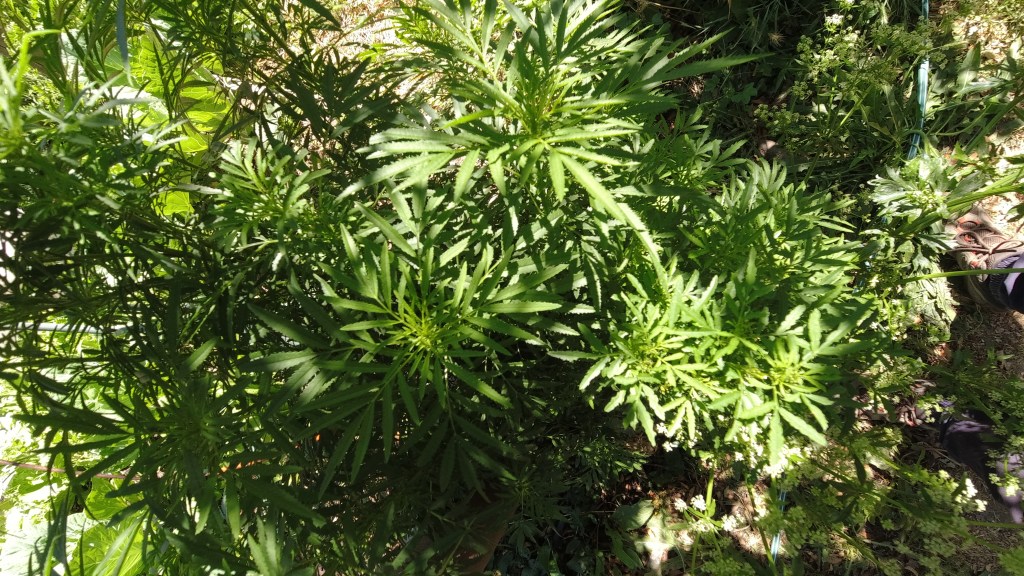
At a moment of institutional collapse and human exhaustion, something was quietly unfolding in a community garden behind the hospital building. A modest space, barely visible from the street, called Wali Yapu — meaning ‘fertile land’ or ‘good garden’ in Aymara. There, among chard, lemon balm, oregano and aloe vera, grew a plant that almost no one in the lowland valleys of central Chile recognised: huacatay (Tagetes minuta), an Andean herb with a sharp, fresh aroma, used for centuries in Bolivian and Peruvian medicine and gastronomy, and described by some as tasting like ‘a blend of basil, mint, lemon and tarragon’.
What was huacatay doing there? It had been brought by Silvia Vega Valiente, a traditional Aymara educator, a hualichiri— ‘the one who remedies’ — who arrived in Limache from northern Chile in 1991. Silvia not only brought the plant. She brought her history, her knowledge and the memory of a people who learned to heal with what the earth provides.
And then something happened that no one had planned.
A hospital worker came to the garden suffering from stomach problems. Silvia prepared a huacatay infusion. Two hours later, a group of his colleagues approached her to ask what she had given him, because he was already feeling much better. That was the turning point. From there, the hospital director said something that changed everything: ‘I want this for my staff‘.
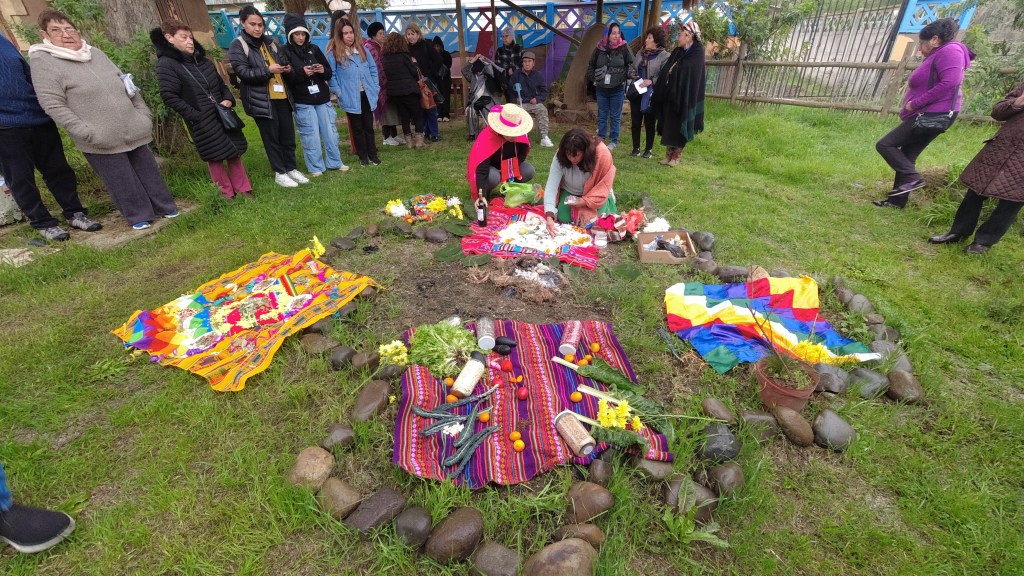
What followed was a chain of events that resists any single explanation. A multidisciplinary team was formed. Silvia became an officially recognised ‘agricultural and family health agent’. Patients began to be referred from the hospital’s clinical rooms to the garden. Some of them, having recovered, stayed on as volunteers. The garden grew, expanded and eventually hosted an Aymara ceremony of gratitude to Pachamama, attended by hospital officials and community members alike.
All of that, from a small herb that barely anyone in the region knew by name.
What kind of force does an herb like this carry? The answer I propose in this article is neither romantic nor naïve. It is philosophical and empirical at once. Huacatay, I argue, is not simply a medicinal resource. It is an actant: something that acts, that produces effects, that reshapes what it touches. As I put it: ‘huacatay does not just exist — it acts. And as a plant that can act, it influences its environment, transforming encounters. When these encounters are transformed, the entire territory is affected and reshaped by them.’
This connects to the concept of ‘plant density’ — developed in my previous research — which refers to the capacity of certain plants to concentrate and generate territorial dynamics, through their history, their expressiveness, their rarity or their affective bonds with those who cultivate them. Huacatay in Limache carries a particular density: not the tallest plant, not the oldest, but one whose journey of displacement, Andean cultural belonging and real efficacy on human bodies makes it a node of relationships that transforms everything it touches.
There is something deeply political in all of this, and I do not shy away from it. Silvia has lived through the discrimination that Chile has historically directed at its indigenous peoples. Huacatay has also been discriminated against — classified as ‘invasive’, as ‘exotic’, as a plant without a proper place in these lands. Together, Silvia and the herb resist that colonial gaze. Not through manifesto, but through sheer presence. As I write: ‘Together, Silvia and the huacatay resist colonialist views of both culture and botany. Plants and humans share this right to be, to exist and to live.’
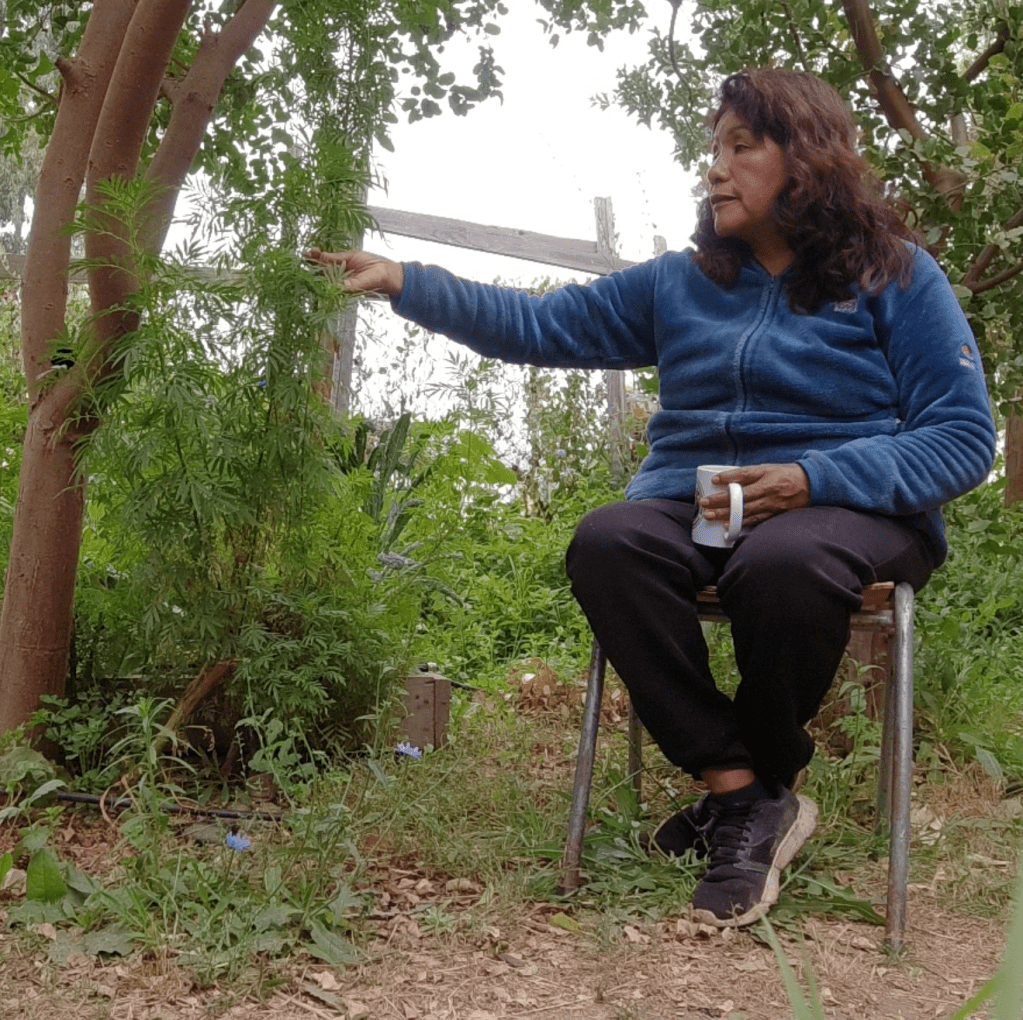
And there is something else that deserves attention. Huacatay came down from the Andes and put down roots in a different climate, a different soil, among unfamiliar plant neighbours. It adapted. It proliferated. It regenerated through seeds each winter. And in that process, it quietly redesigned the territory that received it — not only as a botanical species, but as a living presence, culturally dense, biographically loaded and therapeutically real.
How do bonds transform territories through chains of events, processes and relations that we rarely notice while they are happening? The Wali Yapu garden offers a rare — perhaps not as rare as we assume — opportunity to trace that question concretely, plant by plant, encounter by encounter. The invitation is to look differently: to ask what happens when plants are no longer treated as background or resource, but recognised as interlocutors. As I argue in the article: ‘Allowing plants to design space is a key task for the emergence of new, non-anthropocentric territories, even when these territories are projected by and for humans.’
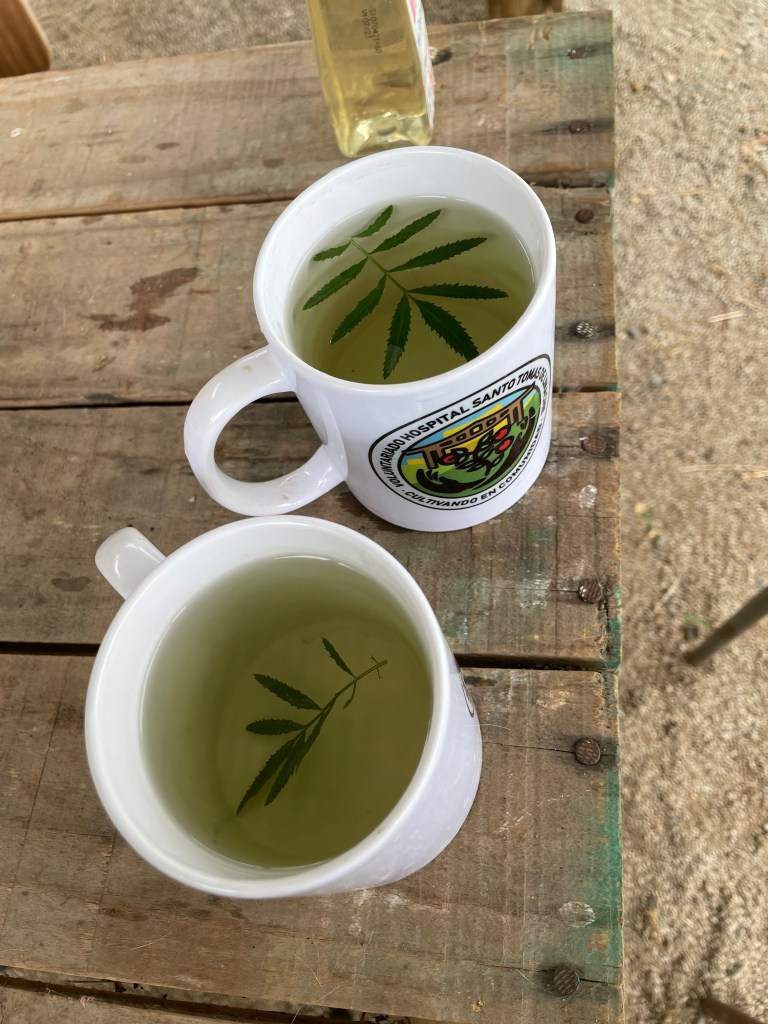
This piece is grounded in fieldwork, attentive to embodied experience, and theoretically engaged — drawing on Latour, Deleuze and Guattari, Harman, Ingold and Escobar without losing sight of a cup of huacatay tea shared with Silvia on a February morning in a hospital garden. It speaks directly to readers working in multispecies thinking, environmental humanities, plant studies, and the politics of indigenous knowledge.
The next time you pass a community garden, stop for a moment. Not just to admire the most photogenic plant or the tallest tree. Stop to ask what story each plant carries. Who brought it. What bonds it has generated. What it has healed. What territory it has, slowly and persistently, been redesigning.
Because a small herb, in the back lot of a modest hospital, can do more than you might think.

