Blake Johnson’s blog, originally published as a Snapshot in Environment and History (May 206) posits the Great Plains of North America in the 1870s as a ‘Bioregional Warzone’ where a complex of environmental and socio-political issues ‘highlight the intersectionality between colonisation, environmental change and the nature of conflict itself’.
Environmental histories of war are not new. Scholars have examined everything from chemicals to species decline to landscape change in conflicts large and small. As war is a constant, and modern environmental concerns are increasingly dramatic, the need for a bioregional approach is all the more necessary. Uniform biological qualities of the environment most commonly identify the bioregion. The same flora and fauna frame borders that extend beyond the lines drawn on a map. Important for the scholar of the bioregion, damage to one particular place within the region sends ripples throughout. The effects of these ripples are both ecological and cultural. Few places illustrate the intersecting issues of a bioregional warzone quite like the Great Plains of North America in the 1870s.[1]
The Great Plains in the 1870s is known for the Plains Wars, locust swarms and the near extinction of the bison. While these major events have been covered extensively by scholars, few have found the framework that demonstrates how all of them are related. Thinking about it from the perspective of the bioregion – that is, from the ground up – helps reveal these relationships.[2] The nineteenth-century Great Plains was vastly different from the national breadbasket it is today. The Great Plains in the nineteenth century earned the nickname the ‘Great American Desert’ due to cyclical drought influenced by the climate regime brought on by the Little Ice Age and closely followed by El Niño and La Niña oscillation throughout the century. Settlers moving west to farm found themselves in a bit of trouble, and many chose to pass the country by in favour of the greener pastures beyond the Rocky Mountains. In short, the plains were a volatile place, known for keen shortages of basic commodities for whites, namely trees, and lacking viable conditions for long-term farming.[3]
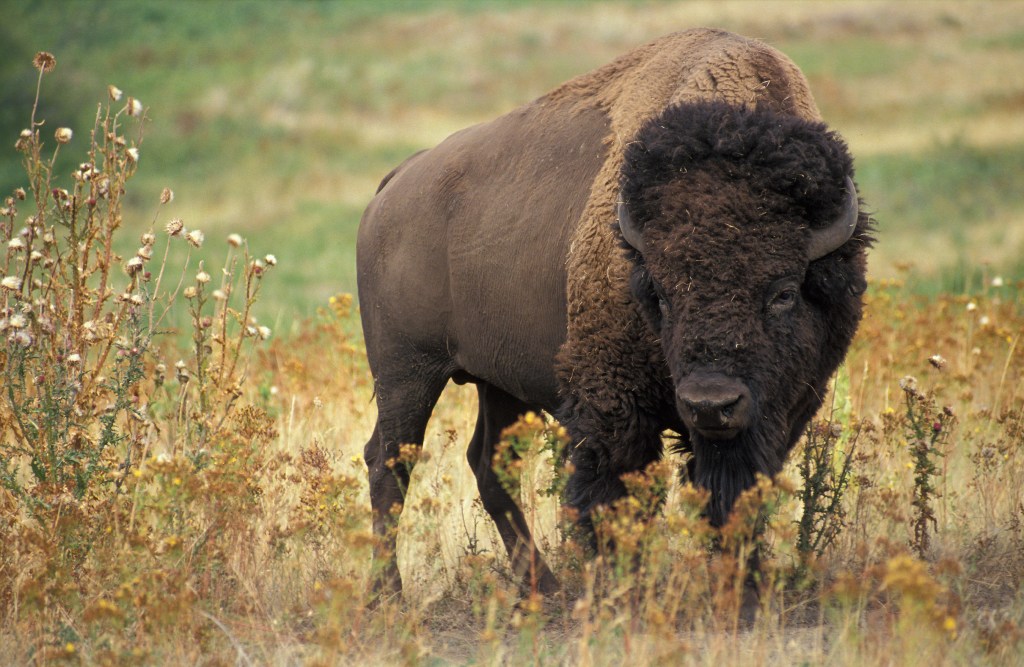
Bison were the cultural keystone species of Indigenous plains people. Bison thrived in the plains’ ecosystems through their mobility and ability to disperse into smaller groups to mitigate food scarcity. Drought and limited food supplies were major natural factors threatening the bison. Human interventions also threatened the bison. These were brought on principally by economic factors like the fur trade that led to generations of Indigenous peoples killing bison and, later, a multitude of white hunters taking their toll on bison populations. Environmental and human hazards threatened the bison population on the Great Plains. Indigenous resistance, which required access to bison, faced the same threats. This decade also saw increased white settlement across the Great Plains. Drought, increased competition over limited grasses, increased hunting and increased farming changed the landscape. These changes brought lasting impacts for humans and animals across the region.[4]
Several Indigenous nations resisted US encroachment on the Great Plains and refused reservation life. Resistant villages utilised mobility in warfare and as a means of survival in a region shaped by its scarcities. The US Army’s Fourth Cavalry under Ranald MacKenzie first chased the Kickapoo and Comanche around the Texas Panhandle on the Southern Plains. In what became known as the Red River War (1874–1875), Comanche and Arapaho villages launched assaults on buffalo hunters in response to their inordinate killing of bison. Mackenzie found the Comanche winter village at Palo Duro Canyon, destroyed their winter supplies and then captured and massacred their horse herd. The lack of mobility posed by winter was exacerbated by the destruction of the horses and led to Comanche surrender.[5]
A new adversary emerged on the Great Plains in 1874 as bison as declined and wheat crops became prevalent. While the Fourth Cavalry marched against the Comanche, the Rocky Mountain Locust beleaguered the region’s new settlers. Migrating swarms caused farms to be abandoned in the United States and Canada. Locust populations grew because regional drought and monocropping encouraged their growth. Locusts were partial to wheat and consumed it at a rapid pace as they migrated southeast. Swarms of locusts bankrupted settlers from Manitoba to Minnesota and from the Dakotas down south as far as Kansas. The intensification of the colonial project on the Great Plains provided the conditions for the expansion of large swarms throughout the region.[6]
American settlers and political leaders viewed these insects as a substantial threat to their way of life. In many ways, they were. On an individual level, settlers lost their whole investment on their farms and either had to get by on the charity of others or move out of the region. These individual experiences, in aggregate, hindered the development of states and territories seeking statehood if settlers either left or were concerned to move to the region for fear of the locusts. Furthermore, Bureau of Indian Affairs reports reveal that reservation assimilation programmes centred on farming failed miserably in the wake of locust migrations. Military victories against resistant villages meant nothing if Indigenous peoples could not be assimilated once on the reservation. In a very real way, the locusts had become among the greatest threats to colonial expansion.[7]
In 1876, Mackenzie was sent to fight resistant Lakota and Cheyenne in what whites call the Great Sioux War. Sometimes, the US Army was lucky and could find a village and drive out its inhabitants. But without a systematic destruction of supplies, the village and its defenders would salvage what they could, resupply from other nearby villages and continue their resistance. In late November 1876, Mackenzie found the Cheyenne village of Vooheheve (Dull Knife) and O’komôxhaahketa (Little Wolf). They surprised the Cheyenne at four in the morning in sub-zero November temperatures. They drove the villagers into the rocks and hills, nearly naked, and then systematically burned their supplies. Like the Comanche, the Cheyenne had little choice but to surrender.[8]
In October 1876, as the Fourth Cavalry marched in search of resistant villages, a conference was arranged for governors and entomologists to discern how they would render the Rocky Mountain Locusts extinct. Professor C.B. Wilber, one of the conference speakers, told attendees that many of the farmers on the Great Plains were Civil War veterans. He suggested they should be ‘provided with adequate knowledge and facts concerning the locusts, ways, and means of defense and organized into companies’ to destroy the locust population systematically. Conference attendees planned a violent campaign against the grasshoppers using a mix of starvation, fire and chemicals like kerosene. Each tactic targeted a different stage of the locust’s life cycle. Eggs and nymphs were killed with chemicals, while adults were starved by changing planting habits. By 1902, the Rocky Mountain Locust would be extinct.[9]
As the US Army pursued the Lakota and Cheyenne on the Northern Plains, the bison population continued to collapse in the region. Realising the bison population was not able to sustain his fight against the US Army, Tantanka Iyotanka (Sitting Bull) moved his camp across the Medicine Line (Canadian Border) into Canada. From there, he could feed his people on some of the last remaining large herds of bison and launch raids south into the United States and return to political safety north of the 48th parallel. However, the new Lakota hunters placed further strain on Canadian herds, fostering animosity among Blackfoot and other First Nations in Canada. Once the bison population could no longer support Sitting Bull and his nation, they were compelled to return to the United States and accept reservation life. Sitting Bull surrendered to scarcity rather than force of arms.[10]
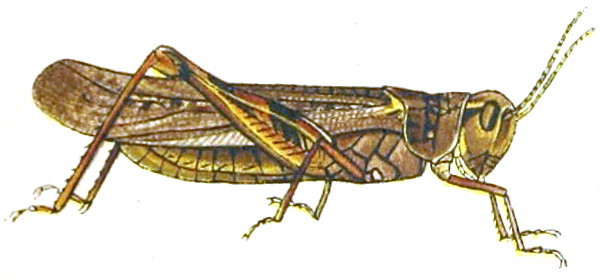
The wars for the Great Plains and the decline of Indigenous power in the region coincided with the loss of North American bison, the rise of wheat farming and the Rocky Mountain Locust. Colonisation of a region begets ecological ripples. In the case of the Rocky Mountain Locust, the ecological consequences of colonisation turned on the colonial project itself. A bioregional approach to examining past war zones helps shed light on the violence of today. The problems of war, especially in areas most susceptible to the unbalanced impacts of climate change, extend far beyond the parties in conflict. Not only are decisions made on the battlefield are influenced by the region they are fought in, but they also affect the biota in the far reaches of the region. It would be well for historians, as well as practitioners of any social science, to examine the bioregional ramifications of warfare, highlighting the intersectionality between colonisation, environmental change and the nature of conflict itself.
[1] Tristian Bove, ‘Bioregionalism: A Model for a Self-Sufficient and Democratic Economy’, Earth . Org 16 March 2021: https://earth.org/bioregionalism/ (accessed 30 Jan. 2026); Mike Carr, Bioregionalism and Civil Society: Democratic Challenges to Corporate Globalism (Vancouver: University of British Columbia Press, 2004), pp. 73–78.
[2] For examples, see Geoff Cunfer and Bill Waiser (eds), Bison and People on the North American Great Plains: A Deep Environmental History(College Station: Texas A&M University Press, 2016); Andrew C. Isenberg, The Destruction of the Bison: An Environmental History, 1750–1920(Cambridge: Cambridge University Press, 2000); Molly Rozum, Grasslands Grown: Creating Place on the U.S. Northern Plains and Canadian Prairies (Lincoln: University of Nebraska Press, 2021); Robert M. Utley, Cavalier in Buckskin: George Armstrong Custer and the Western Military Frontier Revised Edition (Norman: University of Oklahoma Press, 2001).
[3] Walter Prescott Webb, The Great Plains (Lincoln: University of Nebraska Press, 1981), pp. 3–46, 152–60. Elliot West, The Contested Plains: Indians, Goldseekers, and the Rush to Colorado, (Lawrence: University Press of Kansas, 1998), pp. 226–35, 287; Kevin Z. Sweeney, Prelude to the Dust Bowl: Drought on the Nineteenth Century Southern Plains (Norman: University of Oklahoma Press, 2016), p. 9; John L. Brooke, Climate Change and the Course of Global History: A Rough Journey (Cambridge: Cambridge University Press, 2014), pp. 469, 495.
[4] Webb, The Great Plains, p. 44; Sebastian Felix Braun, Buffalo Inc.: American Indians and Economic Development (Norman: University of Oklahoma Press, 2008), p. 53; Dan Flores, American Serengeti: The Last Big Animals of the Great Plains (Lawrence: University Press of Kansas. 2017), pp. 113, 128; Sergio Christancho and Joanne Vining, ‘Culturally defined keystone species’, Human Ecology Review 11 (2) (2004): 153–64; Sweeney, Prelude to the Dust Bowl, p. 9.
[5] Robert G. Carter, On the Border With Mackenzie, or Winning the West From the Comanche (Austin: Texas State Historical Association, 2007), pp. x, 105, 113, 169–96, 486–95; Herman Lehmann, Nine Years Among the Indians 1870–1879: The Story of the Captivity and Life of a Texan Among the Indians (Albuquerque: University of New Mexico Press, 1993), pp. 162–64, 185–86.
[6] Jeffery A. Lockwood, Locust:The Devastating Rise and Mysterious Disappearance of the Insect that Shaped the American Frontier (New York: Basic Books, 2004), pp. 22–23, 55; Mark L. Winston, Nature Wars: People vs Pests (Cambridge, MA: Harvard University Press, 1997), p.7.
[7] Annual Report of the Commissioner of Indian Affairs for the Year 1874, (Washington: Government Printing Office, 1874), pp. 44–46, 71, 180–81, 246, 266–67; Annual Report of the Commissioner of Indian Affairs for the Year 1875 (Washington: Government Printing Office, 1875), pp. 220, 222, 233, 258, 288.
[8] Thomas B. Marquis, Wooden Leg: A Warrior Who Fought Custer (Lincoln: University of Nebraska Press, 1967), pp. 169–75; John Gregory Bourke, Mackenzie’s Last Fight with the Cheyennes (Monee: Big Byte Books, 2015), pp. 23–43.
[9] The Rocky Mountain Locust, or Grasshopper being the Report of Proceedings of a Conference of the Governors of Several Western States and Territories, Together with Several other Gentlemen, Held at Omaha, Nebraska, on the 25th and 26th days of October 1876, to Consider the Locust Problem; A Summary of the Best Means Known for Counteracting the Evil (St. Louis: R.P. Studley Company, Printers and Lithographers, 1876), pp. I, 17; Lockwood, Locust, pp. 225–54; Curtis H. Freese, Back From Collapse: American Prairie and the Restoration of Great Plains Wildlife(Lincoln, NE: University of Nebraska Press, 2023), p. 163; First Annual Report of the United States Entomological Commission for the Year 1877 relating to the Rocky Mountain Locust and the best methods of preventing its injuries and guarding against its invasions, in pursuance of an appropriation made by Congress for this purpose (Washington: Government Printing Office, 1878), pp. 350–403.
[10] Paul F. Sharp, Whoop-Up Country: The Canadian-American West, 1865–1885 (Norman: University of Oklahoma Press, 1978), pp. 248–55, 289–91.

