In this essay, Lena Ferriday responds to Peter Coates’ recent Global Environment essay in the Building Environmental History Around the World’ series organised by ICEHO. She summarises her career so far as an ‘attempt to continue working in a system that is no longer working, supported by the hope that it might get better’.
For me, environmental history has always been a history of relationships, between people, places and things. Fittingly, my style of environmental history has also always been shaped by my personal and professional relationships. Unlike Peter, my research interests were not derived foremost from an interest in particular more-than-human environments, nor developed in an uphill battle against those who doubted the credibility of my environmental approach. Instead, they came directly through my encounters with the community of scholars working on British environmental history topics.
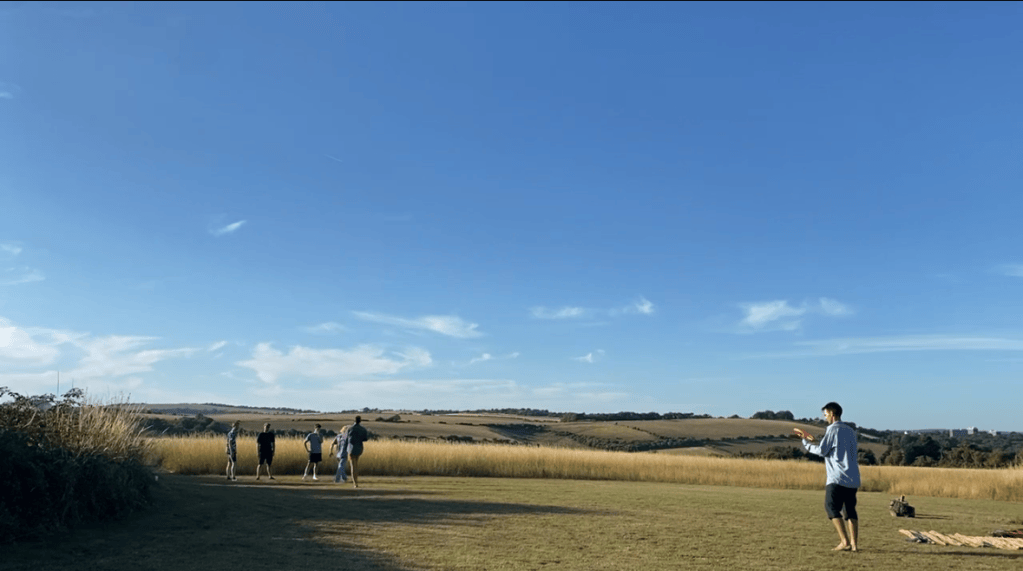
I grew up amidst a variety of physical environments – in a residential area of seaside Brighton, with the pebbled beach at one end of our street and the chalk hills of the South Downs at the other. My environmental inspiration was also drawn from the people around me. Whilst writing these words, a postcard has slipped through my letterbox. It’s from my parents, who are enjoying a weekend away in the Peak District, an upland National Park in northern England. While my Mum poeticises on ‘A beautiful stay … not a bad place to lay one’s head and fill one’s bellies after some creatively navigated walks’, my Dad was ‘Fully vibed up on Victorian architecture, industry and exploitation of the workers.’ The way they narrate their holiday is perfectly illustrative of the forms of environmental thinking I grew up with: affective, sensory and political.
I chose the University of Bristol for my undergraduate studies because it seemed as liberal and welcoming a place as my hometown, but with greater subcultural variety. My arrival in September 2016 fell slightly after Peter Coates’ teaching heyday, but I found the History department filled with environmentally-inclined scholars. There were the hires of those whose Ph.Ds. Peter had supervised – Andy Flack and Marianna Dudley – but also Adrian Howkins and Dan Haines. It was Adrian’s second-year historiography lectures that introduced me to ideas of more-than-human ‘agency’, which I was able to follow through later in courses like Tim Cole’s Holocaust Landscapes. Historians from other fields also took a strong interest in place and geography, which they embedded into their teaching. A first-year lecture series on the modern British city delivered by Erika Hanna set me thinking about scale, locality and the significance of space, and led me to write about the town and country relationship for Will Pooley’s course on Crime and Punishment in France. Particularly influential to my early spatial thinking was Yi-Fu Tuan’s Space and Place: The Perspective of Experience (2001), a text that encouraged me to think about places being layered with multivalent, culturally constructed, emotive meaning. This helped me to uncover History as a discipline interested in the personal, and the ways individuals have constructed their own worlds.
Soon into my undergraduate studies I discovered another historical subfield which complemented my spatial interests and made the greatest intellectual impression on me. When choosing courses for my second year, one caught my eye. ‘Travels in Space and Time, 1850-present’ was Andy Flack’s pedagogical experiment with his post-Ph.D. research, in which he was moving away from zoo studies into a new field called ‘sensory history’. Taking sight, sound, smell, taste, touch and movement as historically specific phenomena, this approach offered me a new lens through which to consider how people engaged with past worlds. The course positioned embodied experience as central to the modern history of how and by what means people have explored unfamiliar global environments. This approach took up an earlier tradition of sensory considerations in Environmental History, which Peter developed and brought to Bristol.[1] Writing to my Dad in March 2017, I explained that I was very keen that ‘things that we talk about in seminars will potentially be contributing to his research! And the research project would have a lot of scope for originality because not much has been written about it’. Despite not doing justice to the expansive field of sensory history in this casual email, I was very excited by a new set of literatures to read, and an active role I might have in the conversation.
During this course I also read works at the core of sensory historiography, with Alain Corbin’s writing making the most indelible mark. In his The Foul and the Fragrant (1986) Corbin articulated how people’s physical tolerance for particular odours shifted over the modern period, and that these sensitivities were culturally produced. This work underscored the significance of power and inequality for historians seeking to understand environmental experience, where even such base phenomena as smell could be instrumentalised to reinforce harmful social dynamics. Going forwards, the sensory angle became central to my intellectual identity, becoming a tool for interrogating how environments were historically lived in and understood.
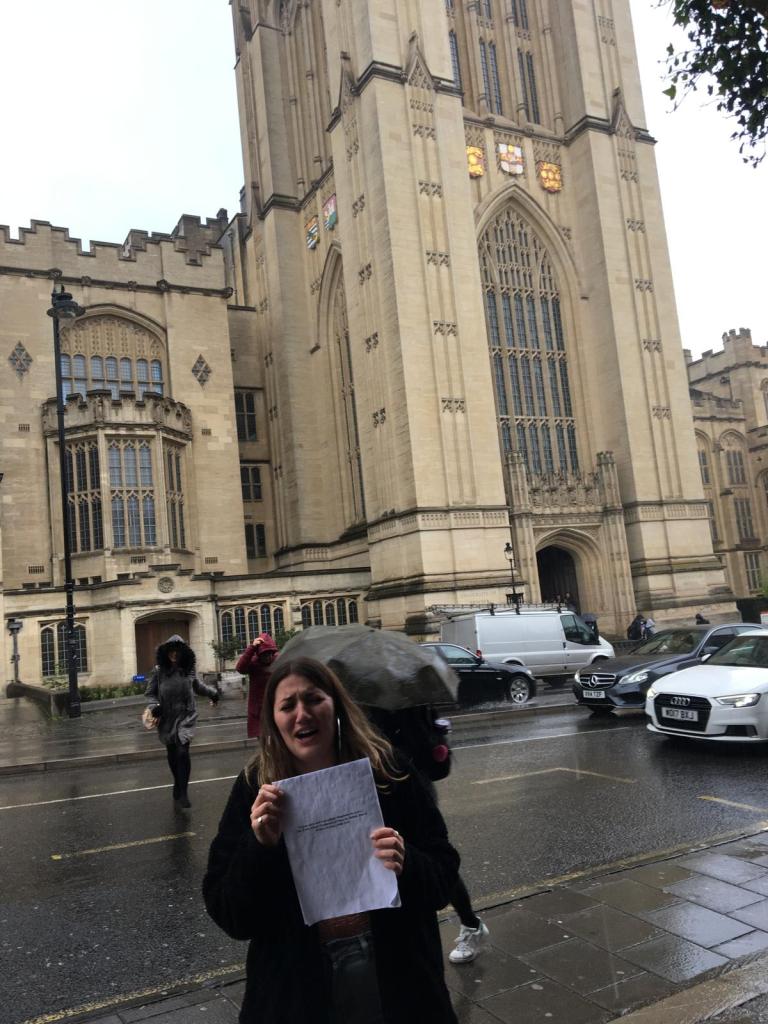
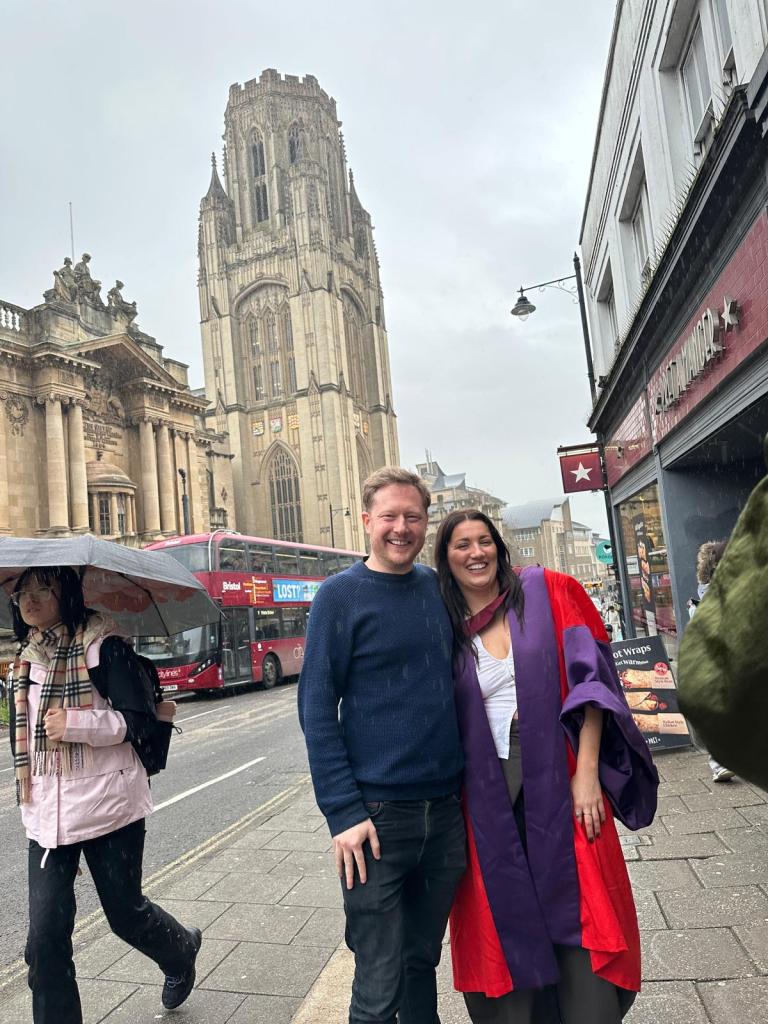
At the end of the 2010s, there were growing pockets of environmental history strongholds, at institutions like Northumbria, Liverpool and Newcastle, bolstered by repeated Wellcome Trust and Arts and Humanities Research Council (AHRC) award-holders Chris Pearson and Clare Hickman, who were connected to Bristol as alumni and ex-colleagues, and continued to be linked as investigators on the MedEnv Network (2019–2023). But I decided to stay at Bristol for my Ph.D. in 2020 because I was aware that there was something special about the community of environmental historians at Bristol, who were tied into a broader network of scholars across the Faculty of Arts through the Centre for Environmental Humanities (CEH). Running since 2017, and at this point under the leadership of Marianna and Dan, the CEH was a hub of generous people keen to share thoughts and company, particularly in the wake of the pandemic.[2] Both the CEH and the History Department showcased an unusual breadth and depth of environmental history research and teaching, which had grown further since my undergraduate studies owing to further teaching hires in environmental history, Alice Would and Mattin Biglari, and showcased in Bristol’s hosting of ESEH2022. During my Ph.D. I taught on newer environmental history courses, such as Wild Things, a second-year animal history module, and broad first-year courses which incorporated environmental history into their weekly syllabus.
I was very glad to receive AHRC funding through the South West Doctoral Training Partnership, a scheme in which students were co-supervised by academics at two universities in the region: Tim Cooper at Exeter, and Andy at Bristol, thus making Peter (as Andy’s former supervisor) my academic grandfather, or Doktorvater. Doctoral funding was less restricted than it is today but certainly not plentiful – of eighteen History Ph.D.s starting at Bristol in autumn 2020, I think only two of us held an AHRC stipend. Without this funding, I would not have been able to develop the networks and undertake the primary research that have allowed me to remain in academia thus far. This funding also supported stints of place-based fieldwork, which sharpened my awareness of the role my body played in my getting to know the rural locations I visited. Having started my Ph.D. feeling slightly isolated from a tradition of environmental history at Bristol that, owing to Peter’s influence, centred the non-human – a perception shaped by my close friendships with Bristol’s animal historians – throughout my doctoral years my work became increasingly material.[3]
This doctoral research became my 2025 Ph.D., ‘Making Sense of Close Encounters: The Embodied Environments of Devon and Cornwall, 1840–1914’, which explore the physicality of everyday practices with the environment in south-west England, in labour and leisure. Despite attending to the different ways certain environments (moors, coasts, underground) were culturally understood – as objects of knowledge, ‘wild’ subjects and spaces of danger or health – my thesis was distinct from the tradition of ‘landscape history’ that has often dominated historiographies of the modern British countryside. While landscape history is often concerned with the cultural representation of Britain’s countryside, my style of environmental history was to investigate such understandings with an emphasis on practice and relationality, heralding both bodily experience and more-than-human action as constituents to a process by which the environment came to be known in the past.[4]
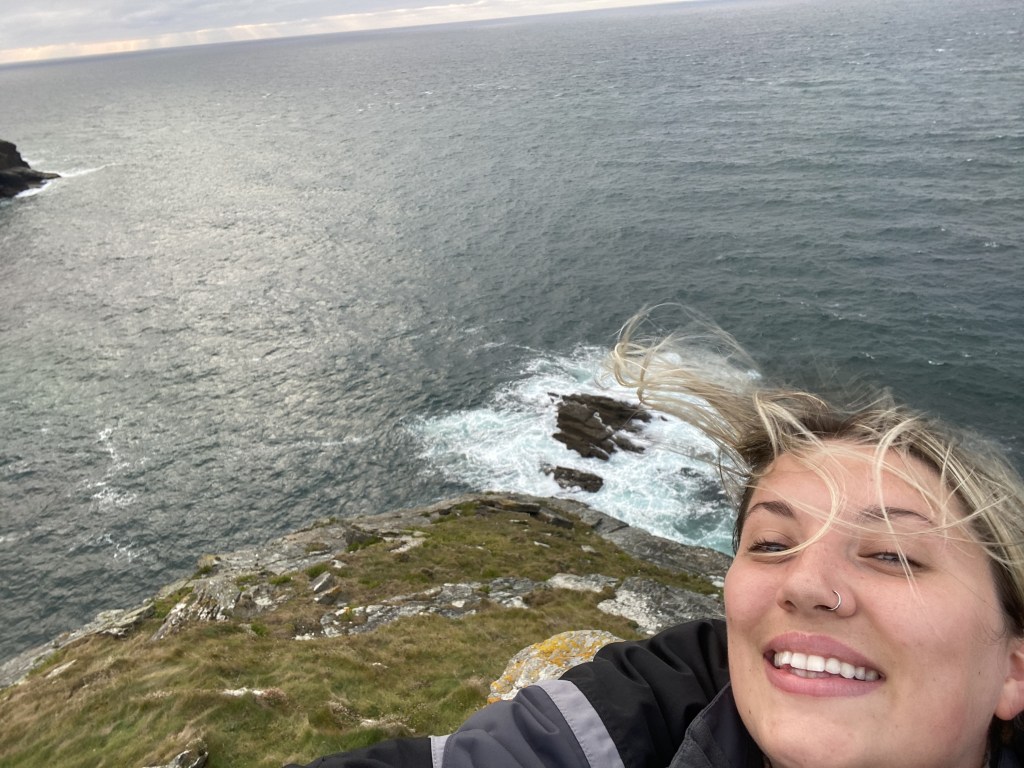
The highlight of my Ph.D. was, with Andy, founding and running the Senses and Sensations research group. During the three years in which the group ran, scholars continued to appear – the group exposing at least 100 scholars working on the senses across the University – with gratitude that we had created a space for them to connect. The group collaborated with the CEH and the environment remained central to our sensory considerations, into the AHRC Curiosity Award that grew out of the network, ‘Sensory Studies for a More-than-human World’ (2026–27).
Peter writes about being ‘chameleon-like’ early in his career, but also perhaps snake-like when shedding his Alaskan-focus to make his work appealing to a broader audience, and a wider set of jobs. In some ways it was a blessing to arrive at the British job market for the first time in 2025, when it was in such a thin state. I had been creating several scholarly identities – through conference attendance, teaching contributions and publication – to strategically position me as qualified for a range of jobs. In the year I submitted my Ph.D., I applied to jobs in modern British and environmental history, but also historical and cultural geography. After many rejections, I was offered a position as Lecturer in the History of Science and the Environment at King’s College London (KCL), taking up the position as the only card-carrying environmental historian among a huge number of scholars who instead identified as historians of science in their Centre for the History of Science, Medicine and Technology. Once in post I realised that this contract was incredibly generous in comparison to most one-year teaching replacement contracts in the U.K. I was given equivalent research time to permanent members of staff and huge scope for syllabus design, bringing environmental history into courses at undergraduate and postgraduate level.
Most distinctive to KCL was the syllabus model which saw teaching staff of all stages design introductory courses for first-year undergraduates that were thematically tied to their research and taught core historical skills. In my offerings, students were introduced to method and historiography by considering the difference between phenomenological, medical, cultural and environmental approaches to the history of bodies in Victorian London and the diverse sources historians might draw on to write critical histories of the British countryside. Allowing tutors to ground this fundamental skills-based teaching in their specialist topic, provides students with rigorous, exciting teaching (precisely the kind that began my path into academia) and as a happy by-product gives precarious and early-career colleagues opportunity to devise research-led teaching. Amongst increasing pressure on staff to offer broad, flexible and high quantities of teaching, these opportunities are few and far between, and it is more than stating the obvious to decry this as a significant loss for students and staff alike.
In many ways, my academic career has been quite conventional for a historian working in the UK – two degrees in succession, a funded Ph.D., followed by a fixed-term lectureship and a postdoc. But conventional to which period? The series of precarious contracts is certainly fitting with the current moment, but funding, consecutive degrees without career breaks and a seamless continuity between paid positions are not representative of the profession in 2026. While the early 2020s saw an increasing number of environmental history job listings across the country, this uptick has dwindled and humanities departments are more readily making redundancies than hires.
I have been incredibly lucky in my paid academic career thus far, although the future of this remains uncertain. I do not use this word facetiously and recognise that I did not attain these positions without hard-work and capability; but there has been a consistent serendipity. This is not to gloat but rather to emphasise that while a Butterfly Effect shaped both mine and Peter’s career trajectories, given how few and far between academic jobs are in the UK today, timing is often the difference between staying in academia and moving to a different profession.
My academic journey is not a tale of how to pioneer or be radical in the world of contemporary academia. It is, however, illustrative of an attempt to continue working in a system that is no longer working, supported by the hope that it might get better. Knowing that the system is fundamentally flawed, with grant capture and job application success a marker of good fortune, I have little desire to drive myself into exhaustion clocking hours to ensure that I am an exceptional candidate, rather than a very strong one. Despite its ills, there is currently nowhere I would rather be than UK academia, and if I am not able to make a life-long career out of it, I am incredibly grateful for the time I have had. But certainly, wherever I end up, I will always remain an environmental historian.
[1] Peter Coates, ‘The strange stillness of the past: Toward an environmental history of sound and noise’, Environmental History 10 (4) (2005): 636–65; Christopher Sellers, ‘Thoreau’s body: Towards an embodied environmental history’, Environmental History 4 (4) (1999): 486–514; Joy Parr, ‘Smells like?: Sources of uncertainty in the history of a Great Lakes environment’, Environmental History 11 (2) (2006): 269–99.
[2] For an output demonstrating that this interdisciplinary collaboration was grounded in the meeting of intelligent minds, through thought and fun, see Adrian Howkins et al., ‘An excursion in the environmental humanities: some thoughts on fieldwork, collaboration, and disciplinary identity following a day trip to the Island of Lundy’, Green Letters 23 (1) (2019).
[3] Alice Would, ‘Tactile taxidermy: The revival of animal kkins in the early twentieth century museum’, Environment and History 29 (1) (2023); Alice Would, Skinning Empire: Environment, Embodiment and Time in British Taxidermy History (Oxford University Press, forthcoming); Andrew Flack, ‘“In sight, Insane”: Animal agency, captivity, and the frozen wilderness in the late-twentieth century’, Environment and History 22(4) (2016); Andrew Flack, The Wild Within: Histories of a Landmark British Zoo (University of Virginia Press, 2018).
[4] For more nuanced articulation of this scholarly tradition, see J. Burchardt, ‘From field walking to phenomenology: A review of recent British landscape historiography’, The Historical Journal 67 (3) (2024) 583–609.

