In this blog Isis Brook, deputy editor of Plant Perspectives, reports on the exhibition ‘In Bloom: how plants changed our world‘, at Oxford’s Ashmolean museum (until 16 August).
I was in Oxford recently for an exhibition at the Ashmolean Museum. ‘In Bloom: how plants changed our world’, was the title. (It is running until 16 August 2026.) Although well worth a visit for a chance to see some of the exhibits, the exhibition was so much less than the title promised. If the exhibition was your main source of information you could be forgiven for thinking that plants changed our world in the 17th and 18th centuries and were pretty much inert background before then. No mention of the oxygen revolution in the Paleoproterozoic era, but then I guess you could argue it wasn’t ‘our’ world then (even if you wanted to be so bold as to argue that it is now), but we wouldn’t be here without that revolution plus all the other environmental changes that plants made – such as building soil from rock – that eventually made us possible. But I digress – back to Oxford.
The historical material was well set out but its overriding narrative was one of plant commercialisation. Whether that was wealthy landowners paying for expeditions to find plant curiosities in a game of collecting one-upmanship, or the discovery of new and exploitable crop plants such as coffee or opium poppies. This rather strident note pervaded the exhibition and much of the contemporary art was a response to this motif. Sometimes amusingly, for example in Justine Smith’s sculpture Specimen Florae Britainniae, where the representation of a floral arrangement, when looked at closely, revealed itself to be made of banknotes.
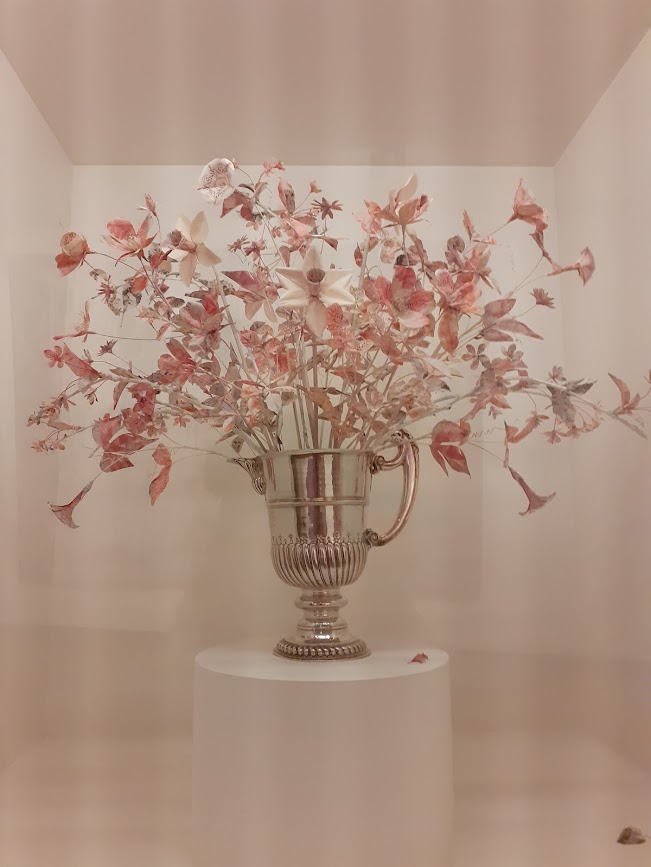
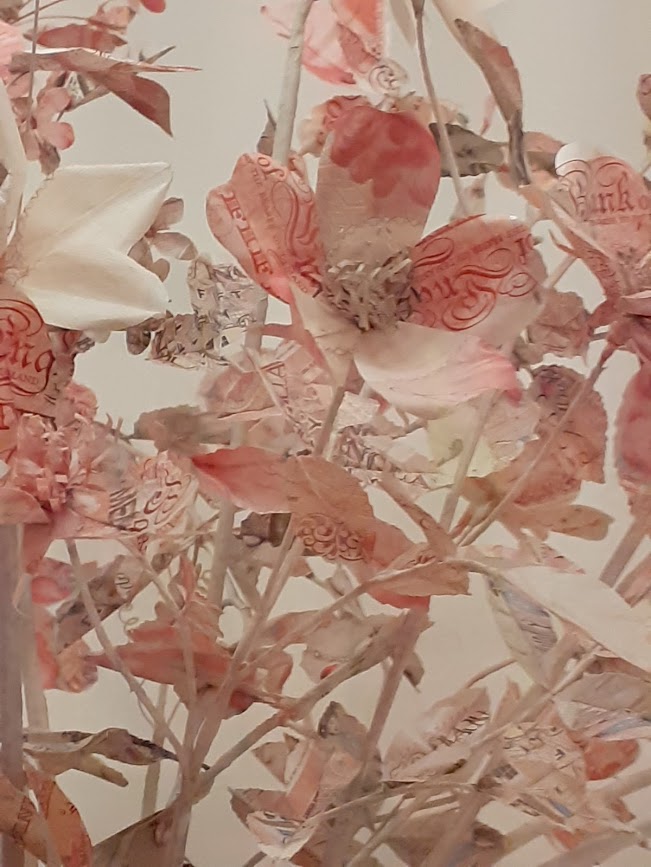
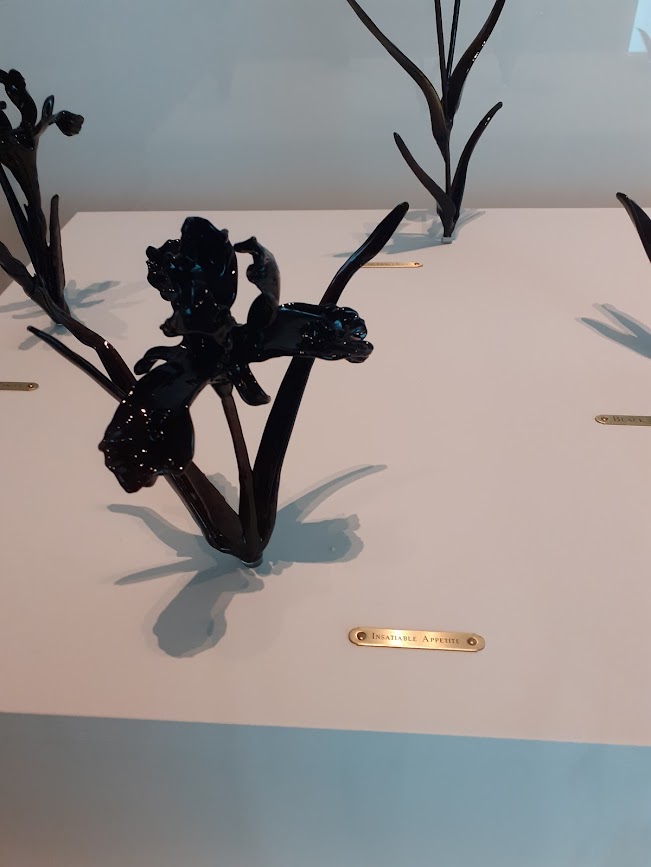
And sometimes disturbingly, such as in Anahita Norouzi’s ‘What’s in a Name’ black glass representations of Iranian irises, giving them new names such as ‘Insatiable appetite’, on typical brass exhibit labels, to connect to themes of exploitation and colonialism.
These interweaving stories and exhibits made a point, but it was one that missed the full complexity, wonder and beauty of plants and the way we interact with them and the way they have shaped us. It was in effect a critique of humans, well deserved, but at the same time a missed opportunity to showcase plant activity in the world.
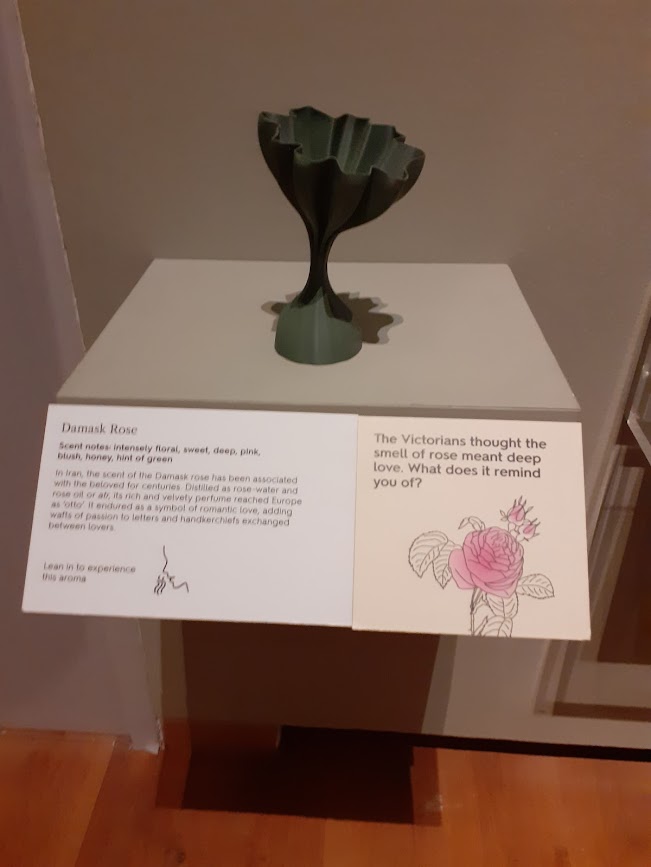
I did like the way scent was included, with the opportunity to smell, e.g., rose oil or an opium den.
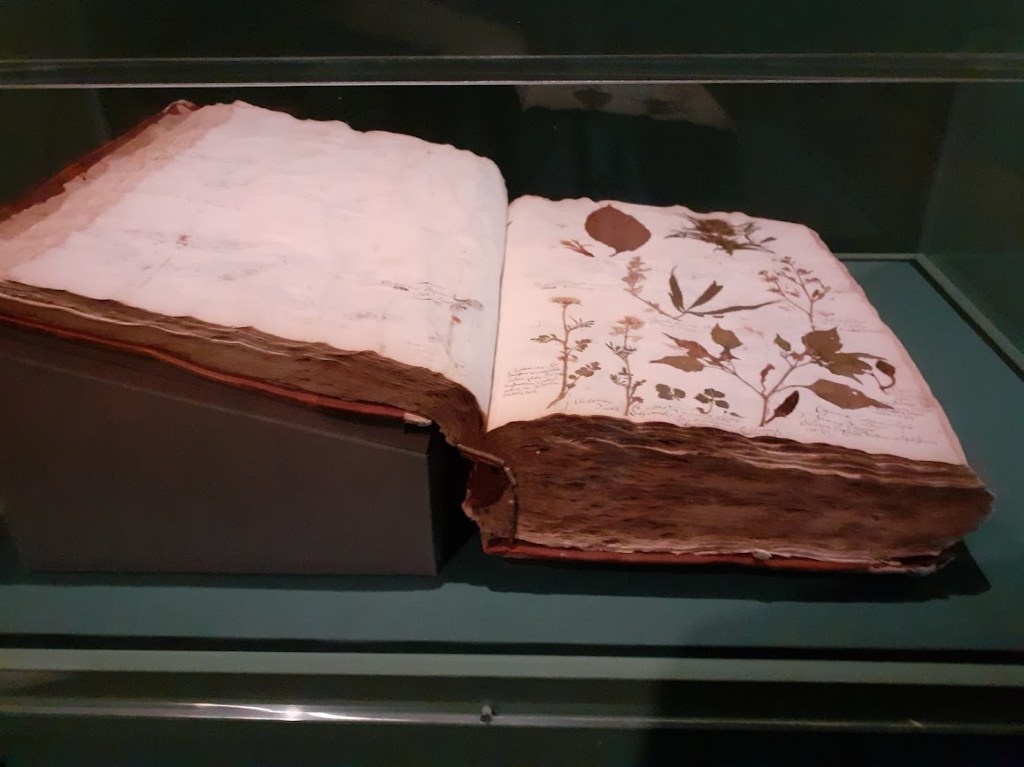
Otherwise it was visual representations of plants all the way, as emphasised by the lack of any living plants. For example, if you are going to include contemporary reflections on using plants why not include a floristry element? This would need to be changed but why not? It would be an opportunity to showcase and reflect on contemporary work in this field. The closest we get to actual plants is the herbarium samples in the extraordinary volume of the Jacob Bobarts’ (both Elder and Younger) collection of dried plants from 1660. The Bobarts both served as Head Gardeners of Oxford’s Physic Garden, the Elder from 1642.
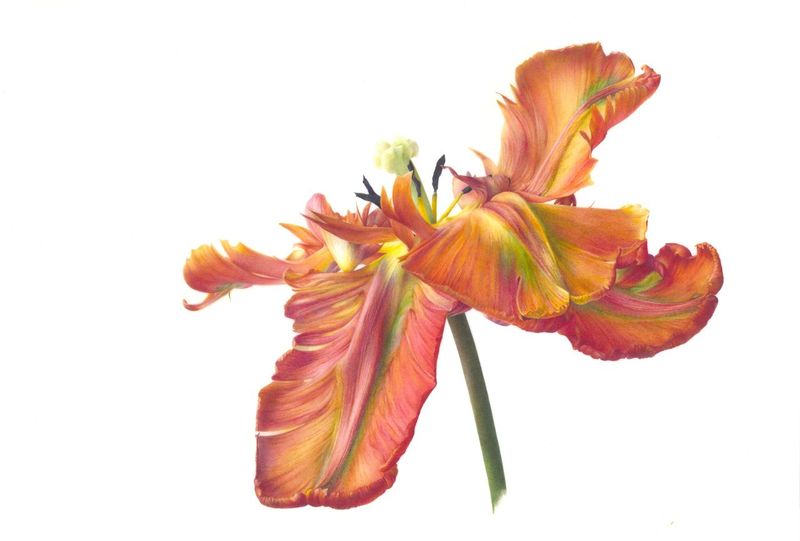
Among the contemporary representations there was a whole wall given over to huge plant photographs by Kate Friend: only one would be needed to demonstrate how botanical paintings, such as the one by Fiona Strickland ‘Tulipa Blumex Parrot’ , can capture the livingness of plants so much more effectively than any photograph – Why is that? Why does the camera lens impose a deadening on plants no matter how skilled the photographer?
This deadening of the living wonder of plants is even more evident in the University’s 19th century wooden and paper mâché models of plant reproductive structures. The grotesque size of these was perhaps due to their use in teaching large classes. They lack all the elegance of, for example, the Blaschka Glass Models made for Harvard University, in which even the enlarged forms or parts for teaching still capture the beauty of the plant.
Another way this exhibition could have been so much more exciting would have been to have some ferns. We could see the Wardian case that plants were transported in (an exhibit I have seen many times). So why not have a state-of-the-art version alongside it populated with the ferns or other plants that excited our forebears, there for us to re-imagine the plants’ intrepid journeys and the impact of seeing these plants for the first time. Museums are used to having to cater for specific lighting and humidity conditions – why not demonstrate that skill and be more inventive about what an exhibit can be?
The last wall of the exhibition was interesting as it connected to the earlier Bobart exhibit by showing framed photographs by Fran Monks: portraits of current plant researchers at Oxford University each with the plant they focus on. It was an earlier style of posed representation, reminiscent of the portrait of Tradescant, but in a modern medium. Above them was a quote from Robin Wall Kimmerer which I will end with as it touches on what was there, but also what was missing.
The practice of doing real science brings the questioner into unparalleled intimacy with nature, fraught with wonder and creativity as we try to comprehend the mysteries of the more-than-human world.

