In this blog Milja van Tielhof introduces the subjects covered in more detail in her just-published Open Access paper in Environment and History, ‘Building Cisterns to Buffer Water Scarcity. The Road to Public Responsibility for Drinking Water in Amsterdam, 1670–1790’ (online first May 2026).
Amsterdam, with its elegant patrician houses, beautiful churches and tree-lined canals, was a popular destination for English travellers in the seventeenth and eighteenth centuries. But visitors often noted a major drawback, the noxious stench coming from the canals. In 1730 an anonymous author called Amsterdam ‘a beautiful girl with a bad breath’ and this accurately described the situation. The low quality of the surface water and ground water caused another problem: seasonal scarcity of drinking water. But the city government devoted much more attention to the first challenge. Why was that?
Historians suspect that the fact that the problems affected distinct social groups, played a dominant role. The smells bothered not only visitors, but also the city’s residents and especially the local elite. They lived right on the waterfront, in the so-called Canal Belt. This seventeenth-century urban expansion was the most prestigious place to live. The only disadvantage was the smell, especially in summer. It was hard to ignore, in spite of the fragrant lime trees deliberately planted alongside the water. This must have given the urban authorities an extra boost of motivation to do something about it. The city archives abound with documentation on their efforts to improve the circulation of the water.
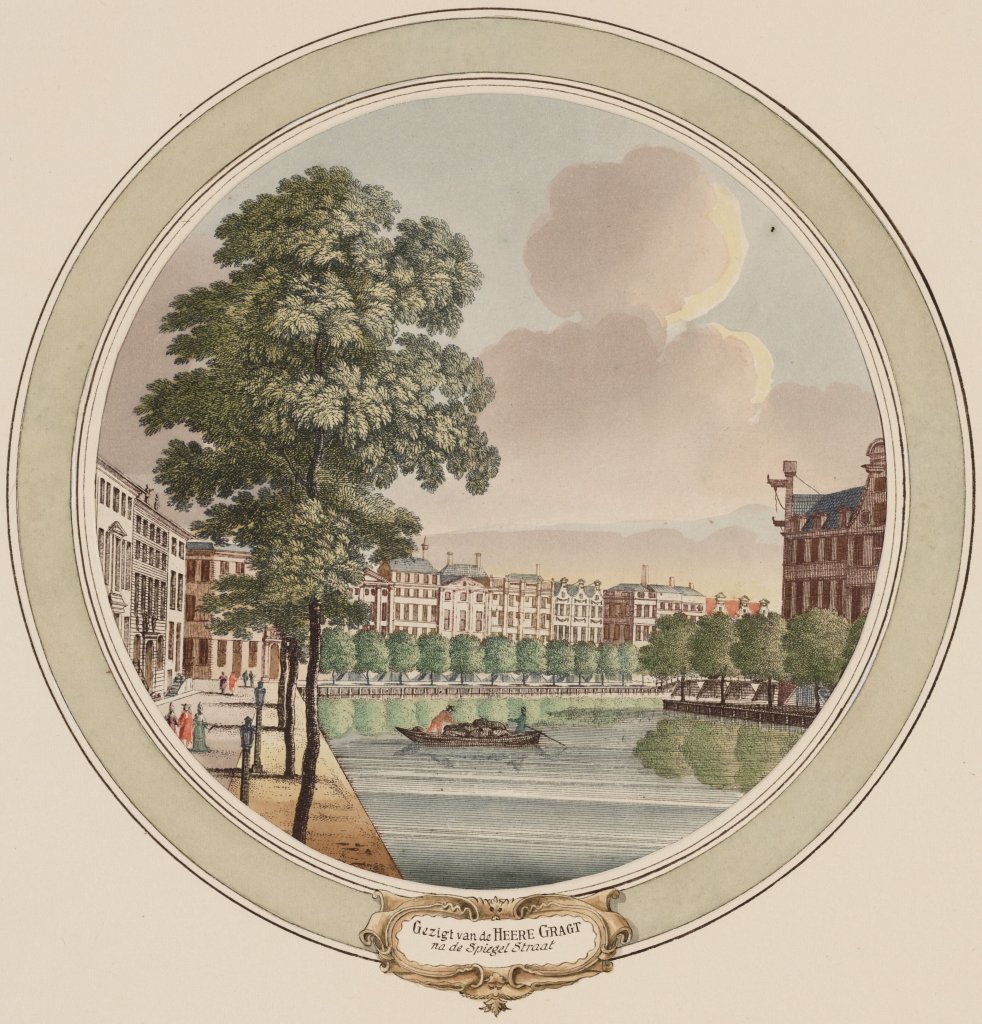
The intense and practically permanent attention to the quality of the water in the canals contrasts sharply with negligence over the other problem – the seasonal scarcity of drinking water. Despite recurring crises in harsh winters, when Amsterdam was difficult to reach by water boats normally importing water from dozens of kilometres away, the urban authorities refused to accept responsibility for the water supply. The lack of drinking water exclusively hit the poor, living in crowded houses and often sharing one small rainwater tank with several households. They normally bought additional buckets of water from distributors of barge water. When the waterways were frozen, however, this water was very expensive or even not available at all. Rich people had ample rainwater tanks in the courtyards behind their houses, and could harvest enough rainwater in wet seasons to get through periods of harsh winters or extremely dry summers.
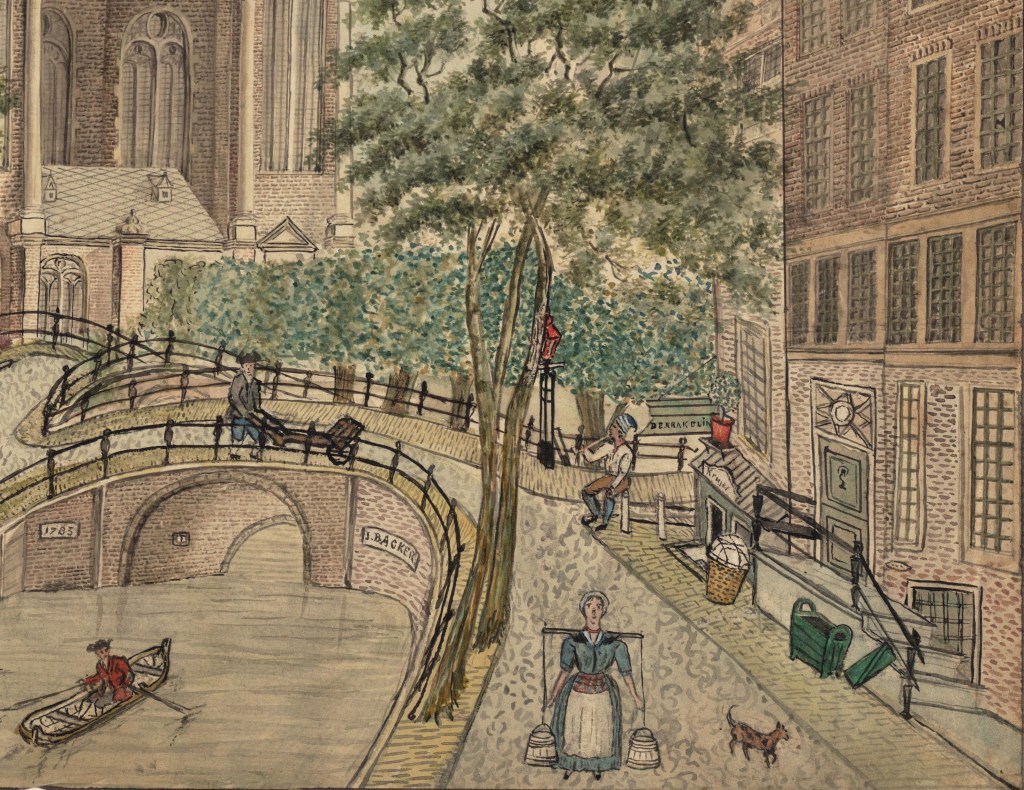
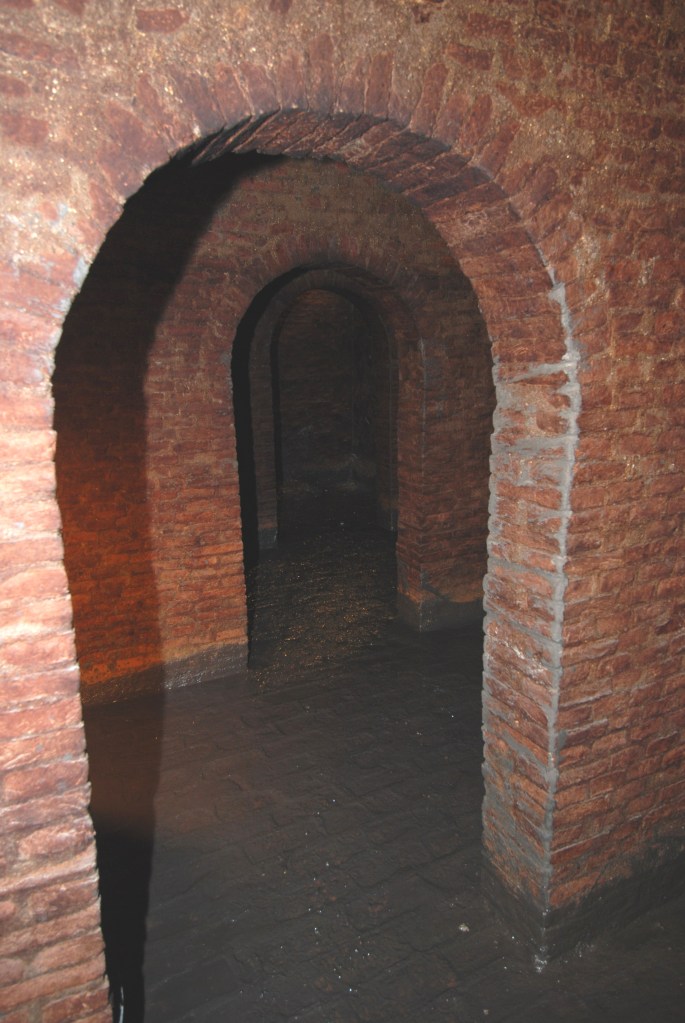
The article analyses how the supply of drinking water turned into a public responsibility in Amsterdam between 1670 and 1790. This was a long and painful process, marked with scarcity crises in extremely cold winters. It shows that rainwater cisterns, which are normally associated with Mediterranean countries, increasingly formed an essential part of the drinking water infrastructure in the city. Foreign visitors heard about these cisterns although they may not have understood quite accurately what they looked like and how big they were. Sir William Brereton, visiting Amsterdam in 1634, for example, wrote that people in Amsterdam had no water to wash with at all, except for the rainwater preserved in ‘rain-bags’. He clearly meant cisterns, which the Dutch called ‘regenbak’ (rain container), but probably didn’t know that these were large, brick underground water cellars. The author editing Brereton’s travelogue in 1844 didn’t make things any clearer, by adding a footnote explaining the rain-bags as large tubs or vats. Nowadays, the cisterns of Amsterdam have disappeared from the collective memory completely. When we realise that they once played an important role in storing water from wet periods to use in periods of dearth, they can inspire us to treat rainwater as a valuable resource again, now that fresh water is becoming more scarce.
References
Abrahamse, Jaap Evert. 2019. Metropolis in the Making. A Planning History of Amsterdam in the Dutch Golden Age. Turnhout: Brepols.
Brereton, Sir William, ed. by Edward Hawkins. 1844. Travels in Holland, the United Provinces, England, Scotland, and Ireland, MDCXXXIV-MDCXXXV [London]: Printed for the Chetham society.
Dam, Petra J.E.M. van. 2023. ‘Stinking canals. The quality of surface water in Dutch cities, 1500–1970’. In R. Bécot (ed.) Le chemin, la rive et l ‘usine. Faire de l’histoire environmentale avec Geneviève Massard-Guilbaud Paris: Presses des Mines. pp. 57–74.

